Omni-Racking

加载

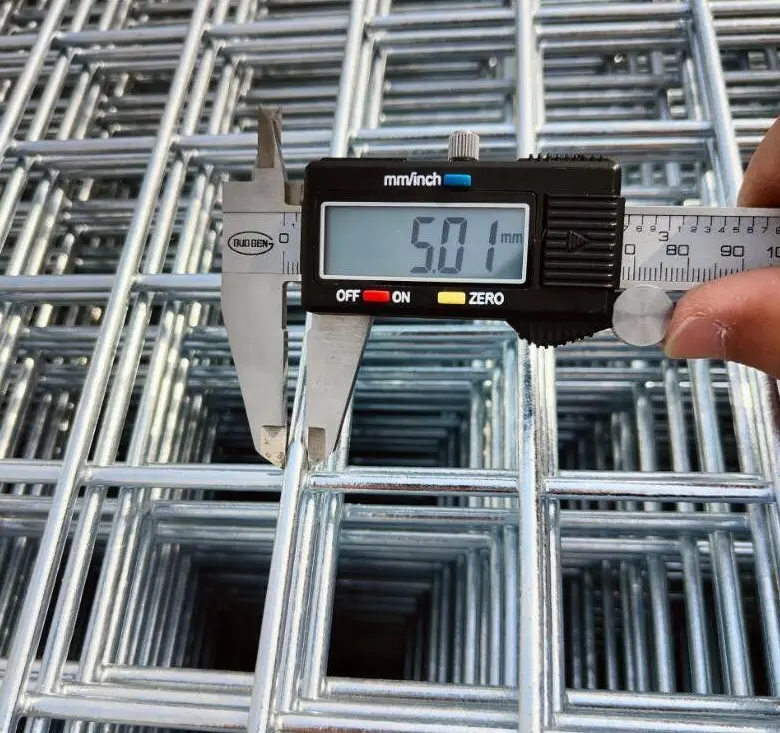
Approximately 5.0 mm wire diameter of pallet rack wire mesh decking
  • 10 月, 周一, 2026

Wire Mesh Decking for Pallet Racking in Canada: 42″ × 52″ Specifications and Load Capacity

BLOG · WIRE MESH DECKING

Wire Mesh Decking for Pallet Racking in Canada: 42" × 52" Specifications and Load Capacity

By Admin · October 12, 2026 · Home › News › Wire Mesh Decking Canada

When sourcing wire mesh decking in Canada, pallet rack distributors, warehouse equipment suppliers, and installation contractors need to consider more than just price. Mesh opening, wire diameter, support ribs, load capacity, and compatibility with existing pallet rack beams all affect product selection.

Omni-Racking supplies wire mesh decking for pallet racking systems, with options for different dimensions, mesh configurations, and reinforcement structures.

For Canadian buyers looking for a common North American rack decking size, our 42″ × 52″ wire mesh decking option is worth considering. This product features a 50 × 100 mm mesh opening, approximately 5.0 mm wire diameter, and three support ribs.

In this article, we explain the key specifications, load capacity considerations, and shipping options for importing wire mesh decking from China to Canada.

1. 42" × 52" Wire Mesh Decking Specifications

Choosing the right wire mesh decking starts with understanding its physical specifications and how it fits your pallet rack system.

The following table summarizes the sample configuration discussed in this article.

Wire Mesh Decking Specifications

Product Wire Mesh Decking for Pallet Racking
Nominal Dimensions 42" × 52"
Mesh Opening 50 × 100 mm
Wire Diameter Approximately 5.0 mm
Support Ribs 3 support ribs
Intended Application Warehouse pallet rack storage
Load Capacity Up to 2,500 lbs per deck, subject to load-rating verification
Supply Options Bulk orders and project-based sourcing

Note: Actual dimensions, weight, finish, and load ratings should be confirmed against the final production specification.

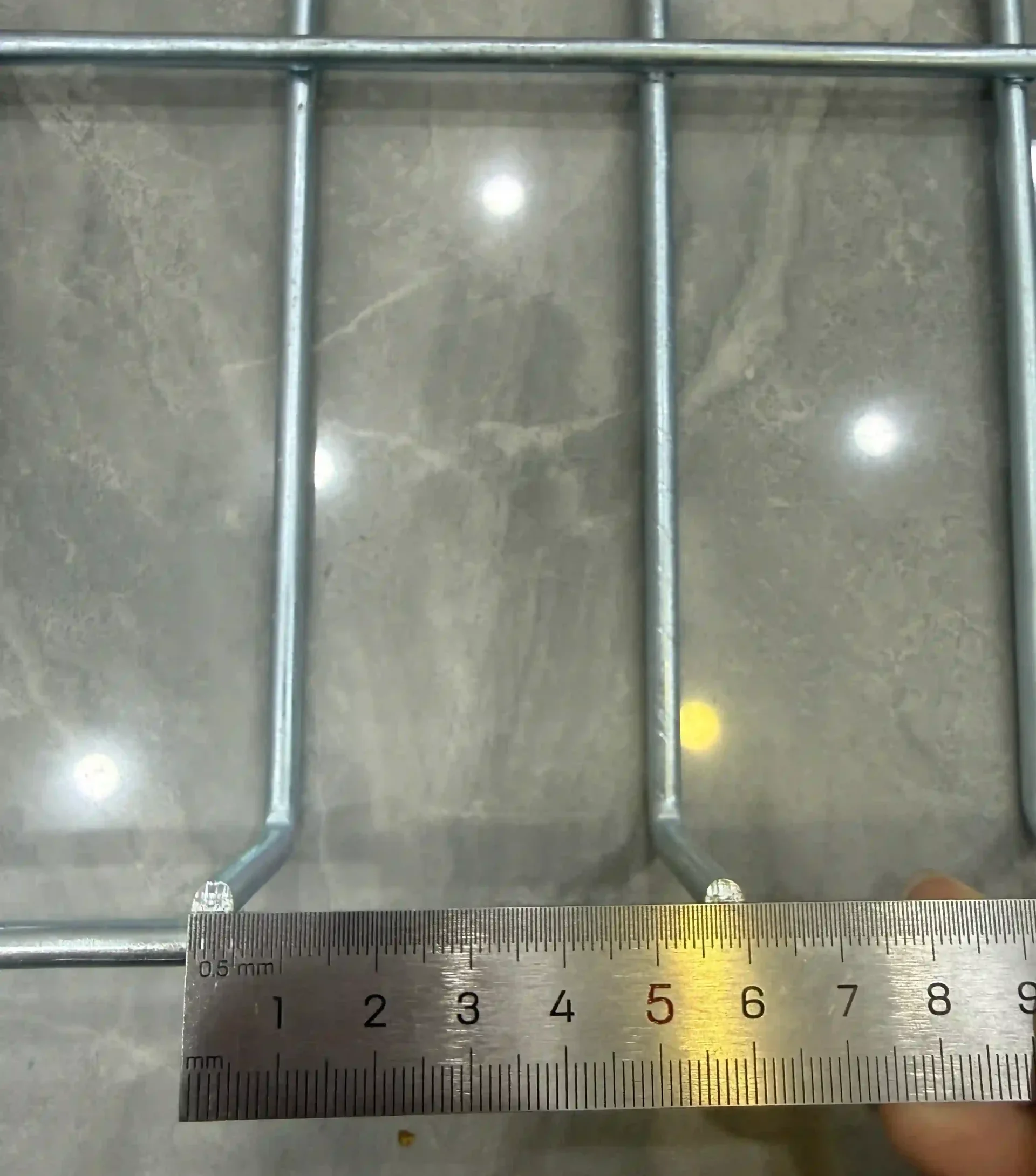
Real Warehouse Measurements: 50 × 100 mm Mesh Opening

Mesh opening size is an important specification when comparing wire mesh decking products.

Our warehouse sample has a measured mesh opening of approximately 50 × 100 mm. This open-wire structure allows visibility through the deck and helps reduce the accumulation of dust compared with solid shelf surfaces.
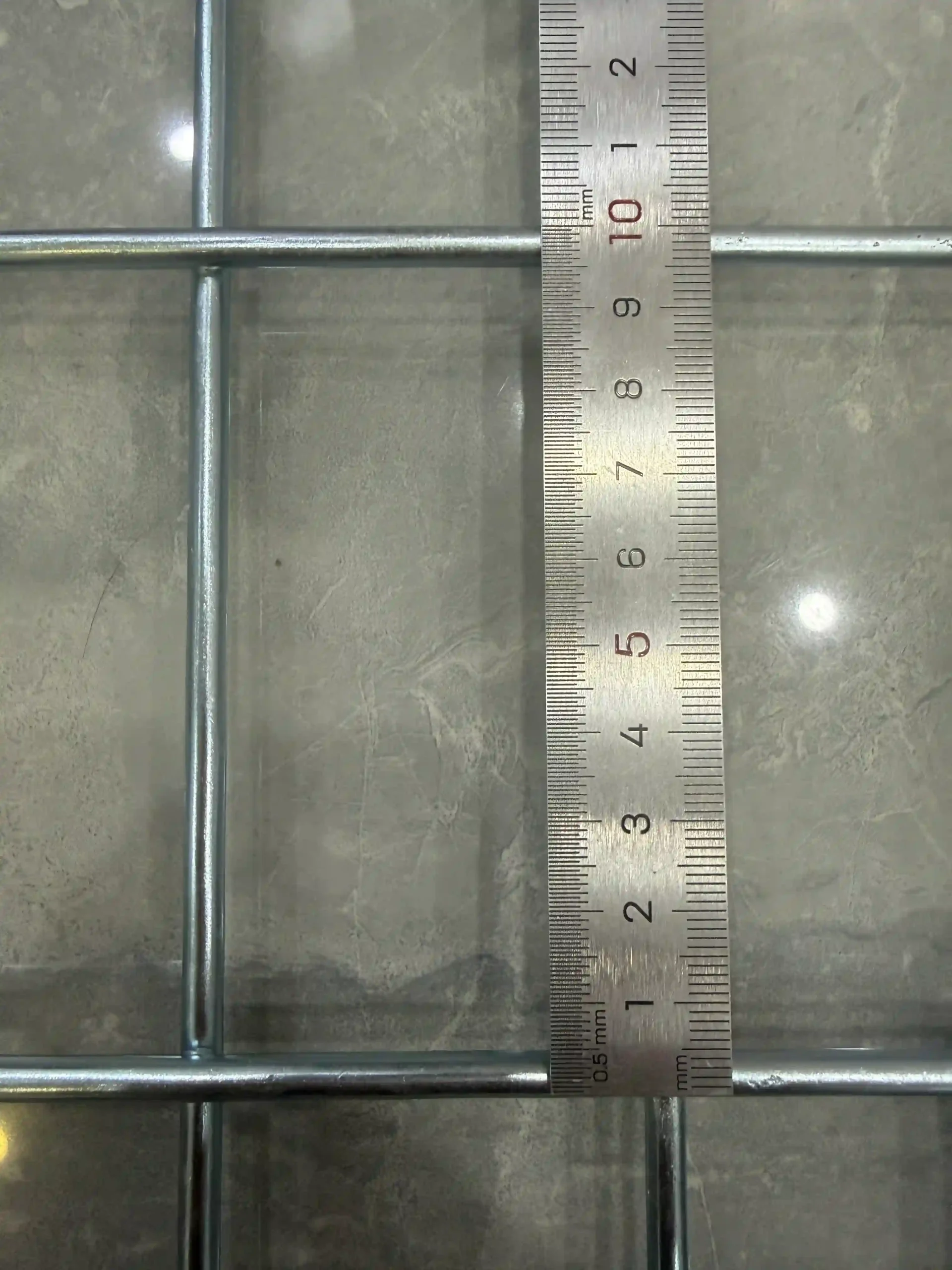
Actual wire mesh decking sample measured in the warehouse, showing the 50 × 100 mm mesh opening.

Actual wire mesh decking sample measured in the warehouse, showing the 50 × 100 mm mesh opening.

Approximately 5.0 mm Wire Diameter

Wire diameter is another important factor when evaluating wire mesh decking for pallet racks.

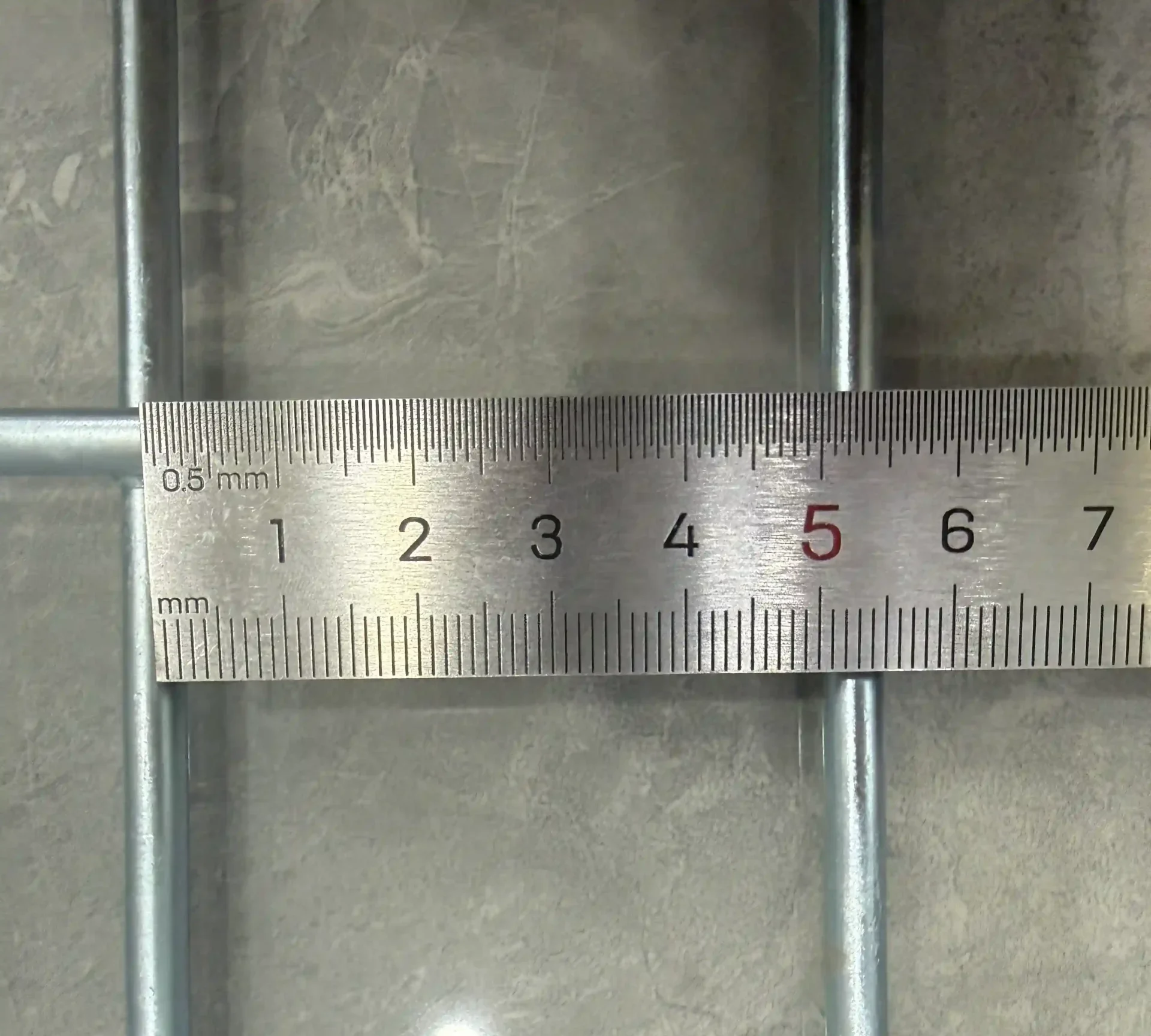
The sample shown here uses wire measuring approximately 5.0 mm in diameter. Wire thickness, mesh spacing, panel dimensions, reinforcement design, and material properties all contribute to the overall performance of the finished deck.
5.0mm wire diameter of wire mesh decking measured with a ruler

Close-up measurement of the approximately 5.0 mm wire diameter on a warehouse wire mesh decking sample.

2. Can Wire Mesh Decking Support 2,500 lbs?

For Canadian warehouse projects, load capacity is one of the first specifications to confirm when selecting pallet rack wire decking.

The 42″ × 52″ configuration discussed here is intended for applications targeting a load rating of up to 2,500 lbs per deck. However, the final rated capacity must be verified for the exact production design and installation conditions.

Load capacity can depend on several factors, including:

  • Wire diameter and material strength

  • Number, shape, and position of support ribs

  • Overall deck dimensions

  • Pallet rack beam profile and support conditions

  • Whether the load is uniformly distributed or concentrated in specific areas

A stated capacity of 2,500 lbs should not be interpreted as a universal rating for every deck with the same nominal dimensions.

Before placing an order, buyers should confirm the applicable load rating and testing basis with the supplier. Where required, obtain supporting test documentation for the specified configuration.

Why Support Ribs Matter

Support ribs reinforce the wire mesh panel and help transfer the load to the pallet rack beams.

Our sample configuration includes three support ribs. The appropriate reinforcement design depends on the deck dimensions, beam arrangement, intended loading conditions, and required capacity.

For distributors and installers serving Canadian warehouses, confirming these details before ordering can help reduce compatibility issues and avoid incorrect load-rating assumptions.

3. Wire Mesh Decking for Canadian Pallet Rack Systems

Wire mesh decking is widely used in warehouse storage systems where visibility, ventilation, and practical access to stored goods are important.

Typical applications include:

  • Distribution centres and logistics warehouses

  • Industrial parts and component storage

  • Retail and wholesale inventory storage

  • Manufacturing facilities

  • Existing pallet rack systems requiring replacement decking

For replacement projects, do not select a deck based on width and depth alone.

Confirm the rack beam type, inside dimensions, support arrangement, and required deck configuration. Step-beam decks, waterfall-style decks, and other configurations may have different support and fit requirements.

If you are unsure which design suits your rack system, share photos of the beams and the existing decking with Omni-Racking. We can review the application and discuss suitable specifications.

4. Importing Wire Mesh Decking from China to Canada

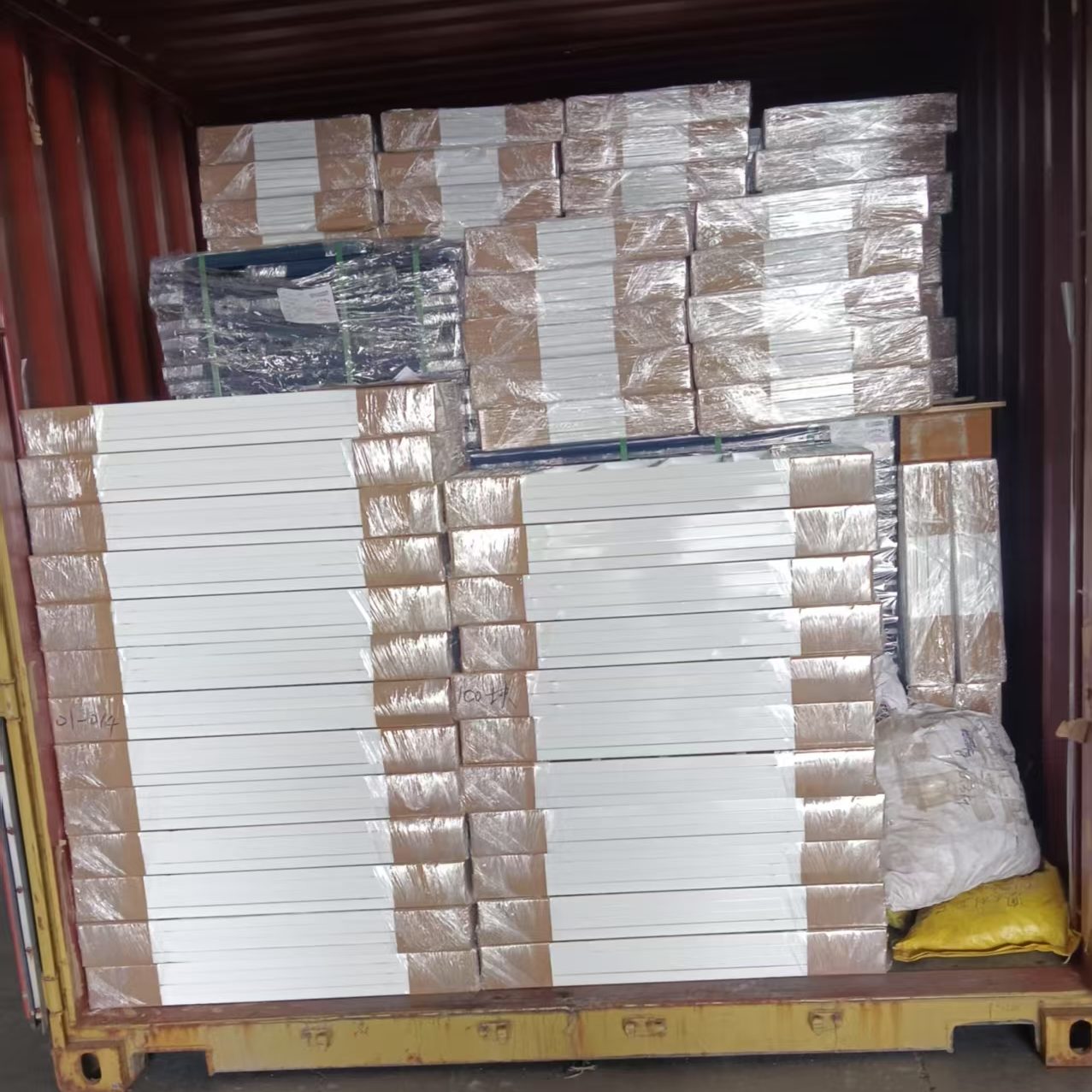
For Canadian pallet rack distributors and warehouse equipment suppliers, container utilization is an important part of evaluating an overseas supplier.

For the 42″ × 52″ configuration, the following are preliminary loading estimates:

Shipping ItemEstimated Quantity
20GP ContainerApproximately 850 pcs
40HQ ContainerApproximately 1,900 pcs

These figures are planning estimates, not guaranteed loading quantities. The final quantity depends on the finished product dimensions, nesting method, packaging, palletization, container loading restrictions, and shipping arrangement.

Before confirming an order, request a packing plan based on the actual production sample and agreed packaging method.

What Canadian Buyers Should Confirm Before Ordering

When comparing wire mesh decking suppliers, consider the following:

1. Product dimensions and fit

Confirm the actual width, depth, support-rib layout, and compatibility with your pallet rack beams.

2. Load rating

Request the rated capacity for the exact configuration and clarify the loading conditions used for the rating.

3. Surface finish

Discuss the available finish, such as powder coating or galvanizing, according to your project requirements and storage environment.

4. Packaging and shipping

Confirm the number of pieces per container, packaging method, shipping port, lead time, and quotation terms.

5. Supply flexibility

If you distribute several rack configurations, ask whether different dimensions or specifications can be included in a purchasing plan.

Working through these details before ordering helps buyers compare suppliers on a consistent basis rather than relying on unit price alone.

5. Why Work with Omni-Racking for Wire Mesh Decking?

Omni-Racking supplies warehouse storage products for overseas distributors, contractors, and project buyers.

We understand that different pallet rack systems may require different deck dimensions, reinforcement structures, and loading specifications.

Our wire mesh decking sourcing service can support buyers with:

  • Multiple mesh opening and wire configurations

  • Different panel dimensions and support-rib designs

  • Specification review for replacement and new rack installations

  • Bulk order and container shipment planning

  • Other warehouse storage products, including pallet racking and medium-duty shelving

For Canadian buyers, we recommend starting with the required dimensions, rack beam profile, target load capacity, estimated quantity, and delivery location. These details help us prepare a more relevant quotation.

6. Request a Wire Mesh Decking Quote for Canada

Looking for a supplier of 42″ × 52″ wire mesh decking for your pallet rack projects in Canada?

Contact Omni-Racking with your required specifications, estimated quantity, and destination city.

If you are replacing existing decking, you can also share photos of your current panels and pallet rack beams. Our team can review the available information and discuss suitable options.

Contact Omni-Racking

Website: https://omniracking.com/

Email: sonya@omniracking.com

WhatsApp: +86 183 5312 5419

Send us your wire mesh decking requirements to discuss product specifications, container loading estimates, and a quotation for your Canadian project.

FAQ

Frequently Asked Questions About Wire Mesh Decking

What size is 42" × 52" wire mesh decking?

It refers to a nominal panel size of 42 inches by 52 inches. Buyers should confirm the actual finished dimensions and support configuration before ordering, particularly for replacement applications.

The sample discussed in this article has a measured mesh opening of approximately 50 × 100 mm.

The sample uses wire measuring approximately 5.0 mm in diameter. Final production specifications should be confirmed before ordering.

The target capacity for this configuration is up to 2,500 lbs per deck, subject to verification of the final design and its rated loading conditions. Buyers should obtain the applicable capacity information before using the product.

Preliminary estimates are approximately 850 pieces in a 20GP container and 1,900 pieces in a 40HQ container. Actual quantities depend on the final product and packaging configuration.

Yes, replacement decking can be discussed. Provide the existing panel dimensions, rack beam profile, support arrangement, and required load rating so the appropriate configuration can be evaluated.

Contact Omni-Racking with your required size, mesh opening, wire diameter, support-rib configuration, quantity, and delivery location. We can review the specifications and discuss a quotation and shipping plan.
Have a Similar Project in Mind?

Tell us your warehouse dimensions and storage needs — we'll design a custom solution within 24 hours.

50mm mesh opening of wire mesh decking measured with a ruler
  • 9 月, 周三, 2026

Wire Mesh Decking for Pallet Racking: A Real 50 × 100mm Mesh Sample

BLOG · WAREHOUSE DESIGN

Wire Mesh Decking for Pallet Racking: A Real 50 × 100mm Mesh Sample

By Admin · September 30, 2026 · Home › News › Wire Mesh Decking for Pallet Racking

Wire mesh decking for pallet racking is available in different mesh sizes, wire diameters, support configurations and dimensions. Choosing the right specification depends on the pallet rack design, beam span and required load.

Recently, we found a 3-rib wire mesh decking sample in our factory stock and decided to measure it myself.

This sample has a 50 × 100mm mesh opening and approximately 5.0mm wire diameter.

Instead of only showing the specifications on paper, I wanted to share the actual product measurements.

5.0mm wire diameter of wire mesh decking measured with a ruler

5.0mm wire diameter of wire mesh decking measured with a ruler

What Is Wire Mesh Decking?

Wire mesh decking, also called wire decking or mesh decking, is a welded steel mesh panel installed between pallet rack beams.

It creates a storage surface for pallets, cartons and other warehouse products while maintaining an open mesh structure.

The open design allows light and air to pass through the rack levels, and it can also allow sprinkler water to pass through the decking in appropriately designed storage systems. Many commercial wire decking products are designed specifically for pallet rack applications.

Different wire mesh decking designs can use different:

  • Mesh openings
  • Wire diameters
  • Support ribs or channels
  • Deck dimensions
  • Edge configurations
  • Surface finishes

Therefore, wire mesh decking should be selected according to the actual pallet racking system rather than by wire diameter alone.

Real Factory Sample: 50 × 100mm Wire Mesh Decking

The sample I measured in our factory uses a relatively heavy wire construction with a 50 × 100mm mesh opening.

Here are the basic specifications of this particular sample:

Item Measurement
Product Wire Mesh Decking
Mesh Opening 50 × 100 mm
Wire Diameter Approx. 5.0 mm
Support Ribs 3 ribs
Application Pallet Racking

Measuring the Mesh Opening

I used a ruler to check the actual mesh opening directly on the sample.

The measured opening is approximately 50 × 100mm.

This is an important detail when specifying wire mesh for racking, because the mesh opening and wire diameter are two separate specifications.

For example:

50 × 100mm mesh opening ≠ 5.0mm wire diameter

Both should be clearly specified when requesting a quotation or confirming production.

50mm mesh opening of wire mesh decking measured with a ruler

50mm mesh opening of wire mesh decking measured with a ruler

Actual wire mesh decking sample measured in the warehouse, showing the 50 × 100 mm mesh opening.

100mm mesh opening of wire mesh decking measured with a ruler

5.0mm Wire Diameter: What Does It Tell You?

The sample uses approximately 5.0mm diameter steel wire.

A larger wire diameter generally means more steel material in the welded mesh, but wire diameter alone should not be used to determine the load capacity of a mesh deck.

The actual performance of a wire mesh deck also depends on:

  • Deck dimensions
  • Beam span
  • Support channel or rib configuration
  • Wire mesh pattern
  • Load distribution
  • Pallet type
  • Rack beam design

Commercial wire decking products are available with different wire diameters and support configurations. For example, current product specifications from manufacturers show combinations such as 4.5–5.5mm wire with 50 × 50mm or 50 × 100mm mesh openings, while other products use different wire gauges and channel designs.

So when comparing mesh decks, don’t compare only the wire diameter.

Why Do Wire Mesh Decks Have Support Ribs?

Look underneath a wire mesh decking panel and you will usually find welded support channels or ribs.

Our sample has three support ribs.

These supports are an important part of the deck structure because they help transfer the load from the mesh surface to the pallet rack beams.

The number and configuration of supports can vary according to the:

  • Deck size
  • Rack beam span
  • Required load
  • Beam profile
  • Decking design

Commercial wire decking is available with different support-channel configurations, including step channels, flared channels and waterfall-style designs.

Therefore, three ribs should not be interpreted as a universal load rating. The complete decking configuration needs to be considered.

Wire Mesh Decking Specifications: What Should You Confirm?

When purchasing wire mesh decking for pallet racking, I recommend confirming at least these specifications:

1. Mesh Opening

For example:

50 × 100mm

or another required mesh pattern.

2. Wire Diameter

For example:

5.0mm

The wire diameter should be clearly stated rather than simply describing the product as “heavy duty.”

3. Deck Dimensions

The length and width/depth of the decking must match the pallet rack bay and beam arrangement.

Common North American wire decking products, for example, are available in dimensions such as 42 × 46″, 42 × 52″, 48 × 46″ and other standard configurations.

4. Support Structure

Confirm the number and type of support channels or ribs.

5. Edge Configuration

Depending on the pallet rack beam profile, different designs such as step, flared or waterfall edges may be used.

6. Required Load Capacity

Always specify whether the required capacity is based on uniformly distributed load (UDL) and confirm how the manufacturer defines the rating.

50 × 100mm Wire Mesh Decking in Real Applications

A 50 × 100mm mesh opening can be used for various pallet racking applications, depending on the overall decking design and load requirements.

Typical applications for wire mesh decking include:

  • Warehouse pallet racking
  • Distribution centers
  • Manufacturing warehouses
  • E-commerce storage
  • Spare parts storage
  • Industrial warehouses
  • Cold storage

The final specification should be matched to the rack system and stored products.

Don't Choose Wire Mesh Decking by One Specification

When comparing different wire mesh decking suppliers, it can be tempting to ask only:

“How thick is the wire?”

But this is only one part of the specification.

For example, two wire mesh decks could both use 5.0mm wire but have different:

  • Mesh openings
  • Panel dimensions
  • Support ribs
  • Beam compatibility
  • Edge designs
  • Load ratings

These differences can affect the final application.

That’s why we prefer to look at the complete decking specification when discussing a pallet racking project.

A Simple Factory Measurement

This sample was already in our factory stock, so I simply took a ruler and checked the actual mesh.

50 × 100mm mesh opening.

Approximately 5.0mm wire diameter.

3 support ribs.

Nothing complicated—just a real product measurement.

For us, these small details are useful when discussing wire mesh decking with customers because the actual product can sometimes communicate more than a specification sheet.

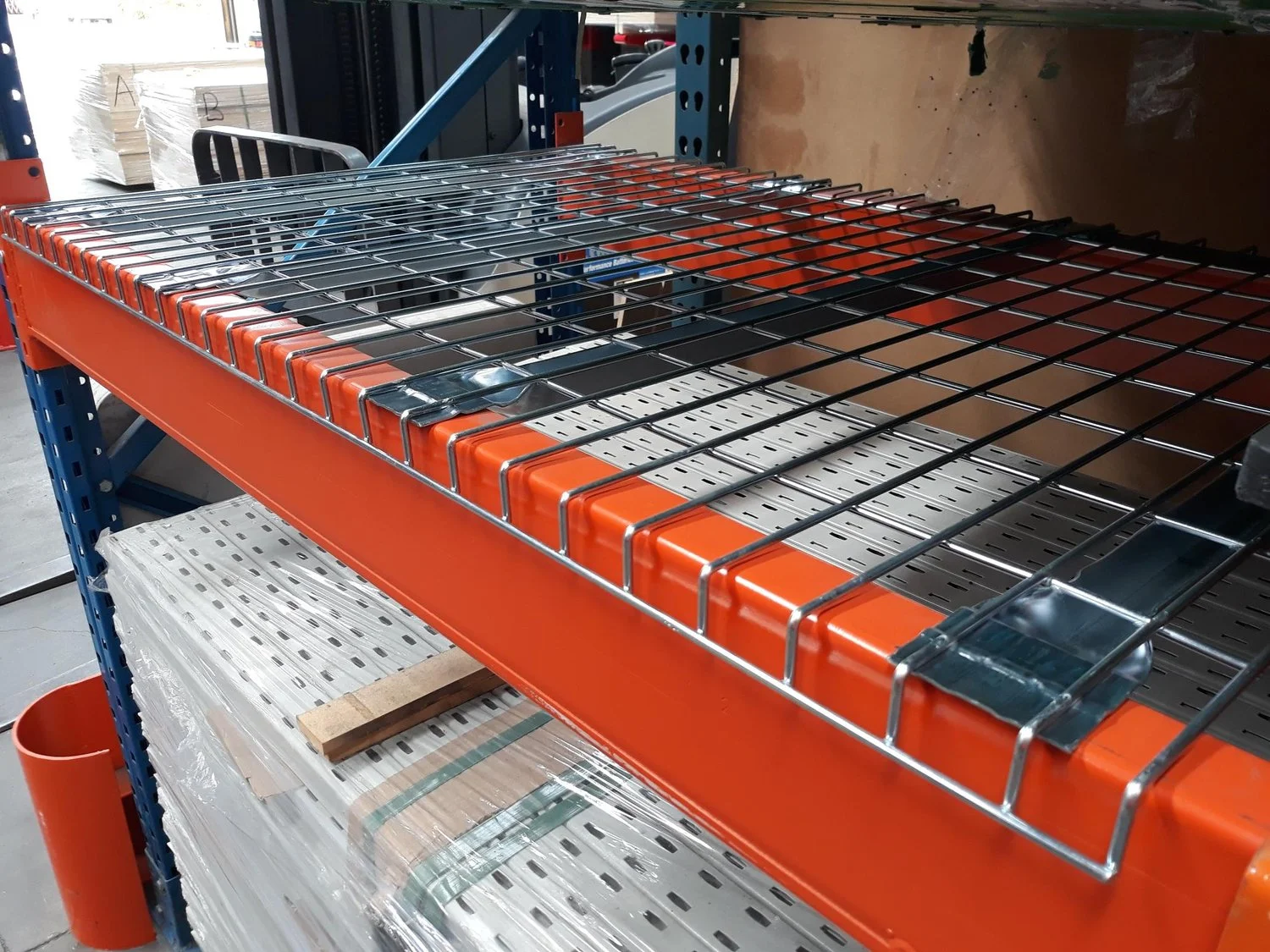
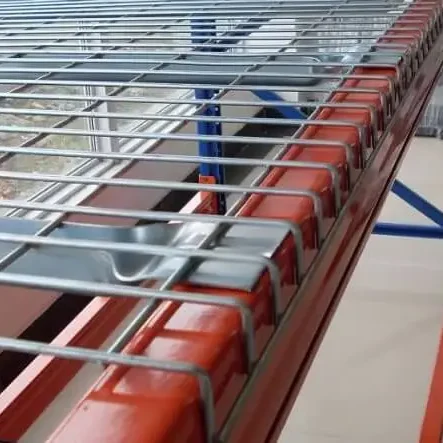
wire mesh decking Installed on pallet rack

wire mesh decking Installed on pallet rack

Need Wire Mesh Decking for Your Pallet Rack?

If you are sourcing wire mesh decking for pallet racking, we can discuss the required:

  • Mesh opening
  • Wire diameter
  • Deck dimensions
  • Support ribs
  • Beam profile
  • Load requirement
  • Surface finish

You can send us your rack beam dimensions, pallet size or existing decking drawing, and we can check the suitable configuration with our production team.

Looking for wire mesh decking? Send us your rack dimensions and requirements, and we’ll check the details with you.

Have a Similar Project in Mind?

Tell us your warehouse dimensions and storage needs — we'll design a custom solution within 24 hours.

  • 9 月, 周四, 2026

How Omni-Racking Helped a Chilean Cable Manufacturer Optimize Warehouse Storage with Customized Racking Solutions

BLOG · WAREHOUSE DESIGN

How Omni-Racking Helped a Chilean Cable Manufacturer Optimize Warehouse Storage with Customized Racking Solutions

By Admin · September 3, 2026 · Home › News › Warehouse Racking

Customized Warehouse Storage Solution for a Cable Manufacturer in Chile

Transforming an Unorganized Warehouse into an Efficient Storage System

Every manufacturing company has unique warehouse challenges.

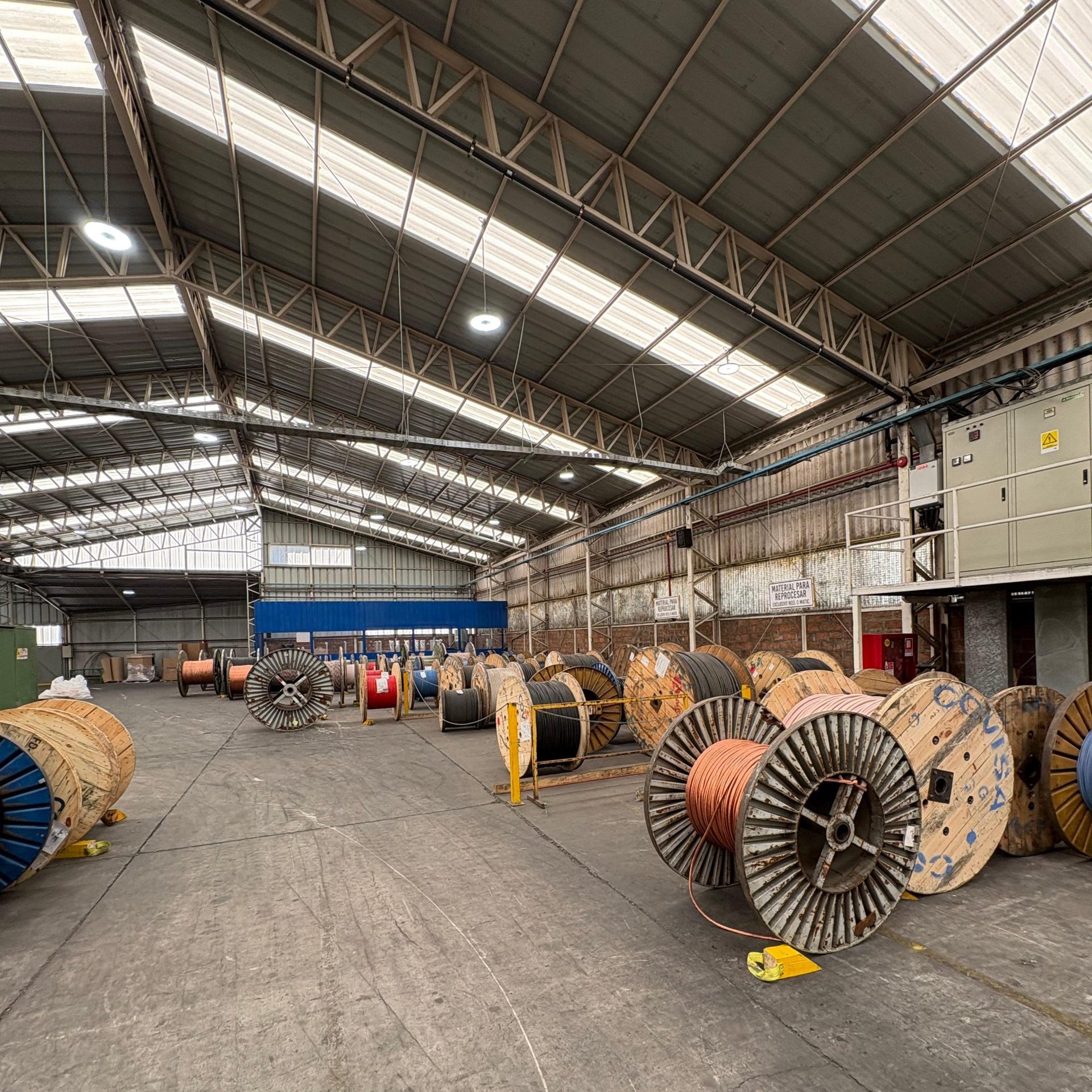
For cable manufacturers, warehouse storage is especially challenging because cable reels are large, heavy, and difficult to organize efficiently. Without a proper storage system, valuable warehouse space can be wasted, and daily operations become less efficient.

Recently, Omni-Racking provided a customized warehouse racking solution for a leading cable manufacturer in Chile, helping them improve storage capacity, safety, and warehouse management.

The Customer's Warehouse Challenges

Before implementing the new storage system, the customer’s warehouse mainly relied on floor storage.

Large cable reels were placed directly on the warehouse floor, creating several challenges:

  • Limited storage space utilization
  • Difficult product organization
  • Inefficient material handling operations
  • Increased safety risks when handling heavy cable reels

As the customer’s business continued to grow, they needed a professional storage solution that could support different product types and heavy loading requirements.

Cable Manufacturer Customer Warehouse

Customized Warehouse Racking Design Based on Customer Requirements

Instead of providing a standard storage system, Omni-Racking analyzed the customer’s warehouse layout, product characteristics, and operational requirements.

Our engineering team designed a complete solution combining multiple storage systems:

1. Heavy-Duty Steel Platform System

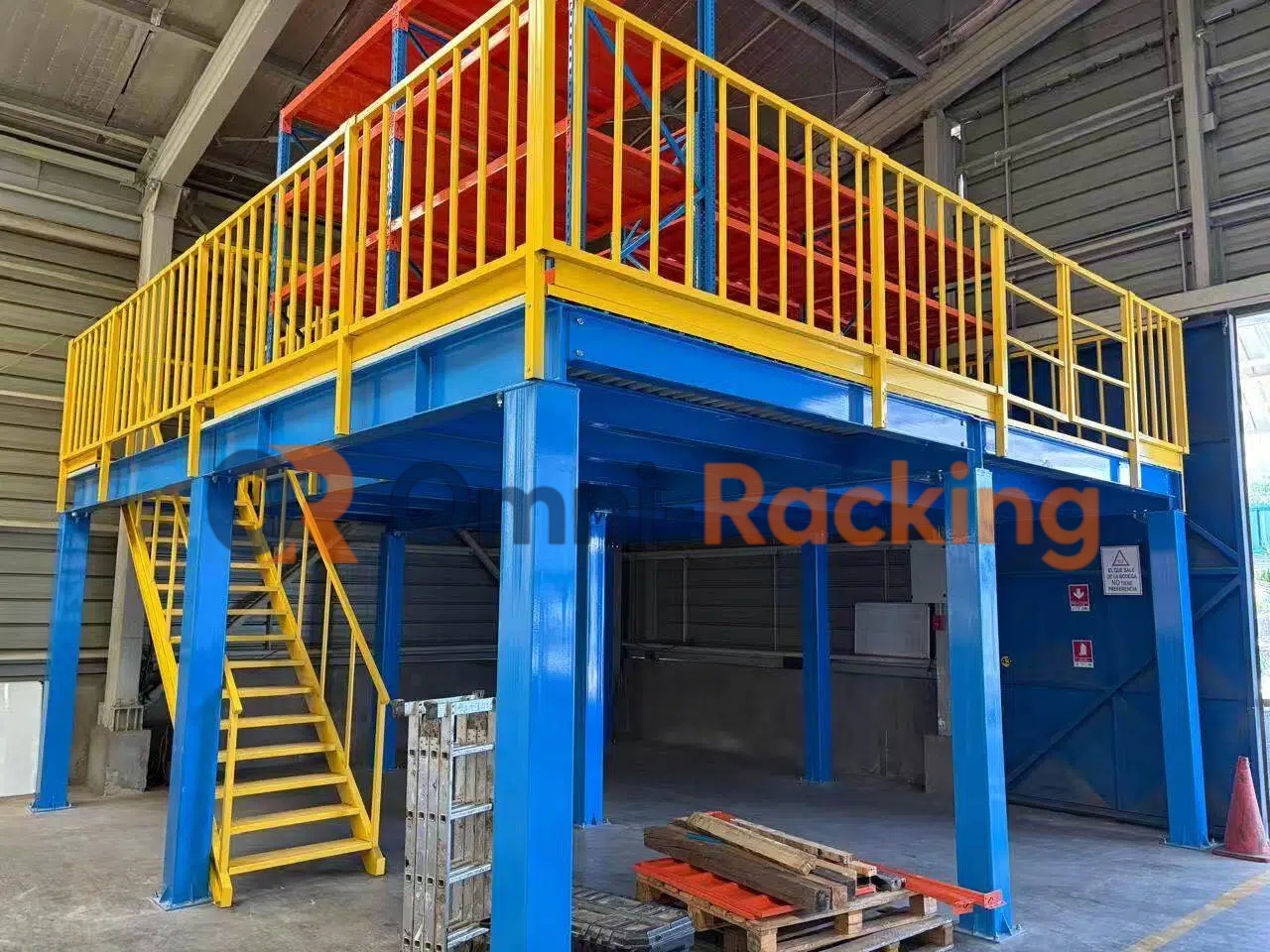
To maximize vertical warehouse space, we designed a heavy-duty mezzanine floor with:

  • Load capacity: 800 kg/㎡
  • Multi-level storage capability
  • Improved warehouse space utilization

The mezzanine floor allowed the customer to create additional storage areas without expanding the warehouse footprint.

Customized 800kg/sqm Mezzanine Floor

2. Medium Duty Shelving System

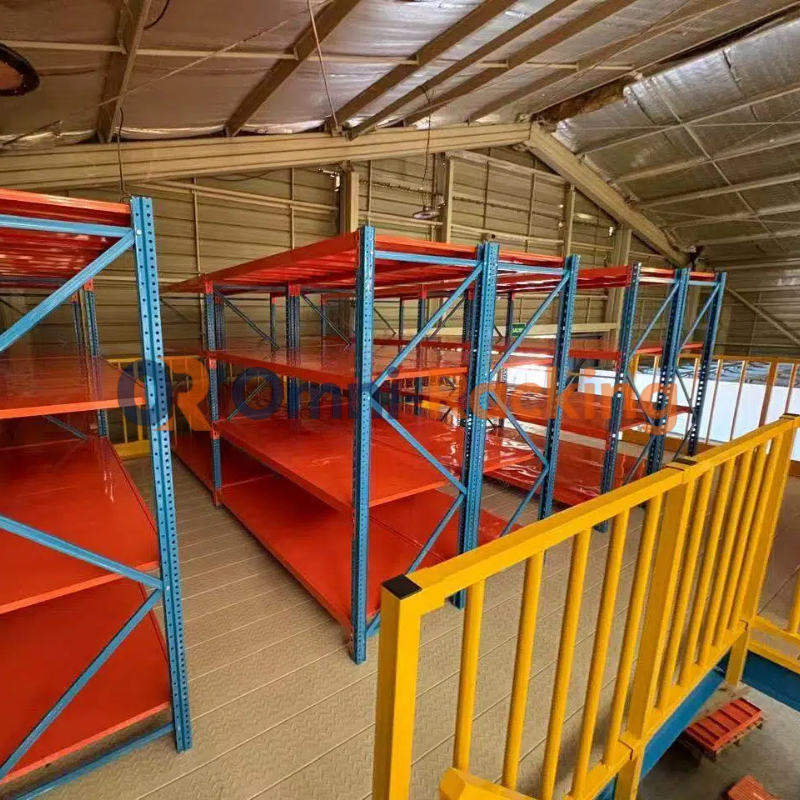
For smaller components and accessories, we provided medium-duty shelving with:

  • Load capacity: 300 kg per level
  • Easy access for warehouse operators
  • Flexible storage configuration

This helped the customer organize different inventory categories more efficiently.

300kg load bearing Medium duty shelving on Mezzanine floor

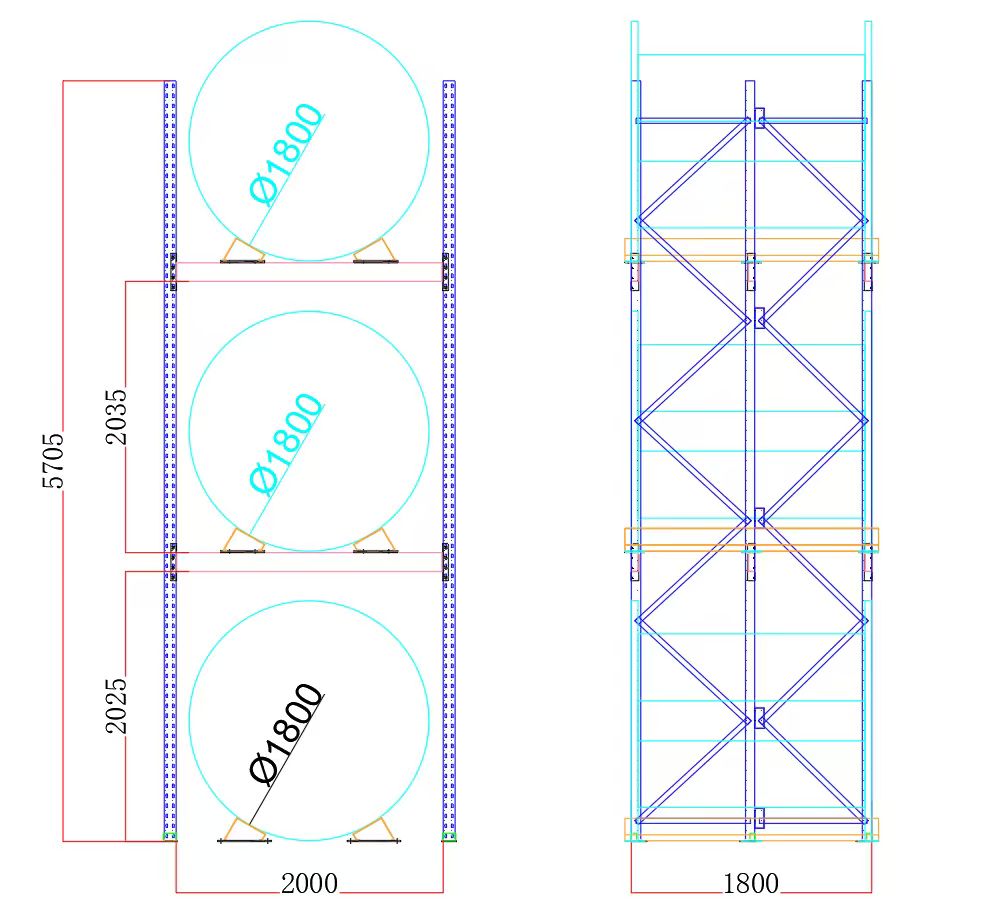
3. Customized Cable Reel Racking System

Cable reels require specialized storage solutions due to their size and weight.

Based on the customer’s requirements, Omni-Racking designed customized cable reel racks with:

  • Heavy-duty beam structure
  • Load capacity up to 3 tons per beam level
  • Strong and stable construction for industrial applications

The customized design improved both safety and operational efficiency when storing and handling cable reels.

300kg load bearing Medium duty shelving on Mezzanine floor

Customized cable reel racking system installed in Chile warehouse

From Warehouse Design to Manufacturing Support

At Omni-Racking, we believe a successful warehouse project is not only about supplying products.

Before production, our team provided:

  • Warehouse layout planning
  • Storage solution design
  • Technical drawings
  • Load requirement analysis

After confirming the design, production started with carefully selected manufacturing partners in China.

During manufacturing, steel coils were processed through roll forming production lines to create precision racking components, ensuring consistent quality and reliable performance.

Drawings for custom cable reel racks

Professional Installation Support for Overseas Customers

For international projects, installation support is always an important part of warehouse racking delivery.

For this Chilean customer, Omni-Racking prepared a customized installation manual specifically for their project.

The manual included:

  • Installation steps
  • Component identification
  • Assembly instructions
  • Safety recommendations

Our team also provided remote technical guidance during installation to ensure the project was completed smoothly.

A Complete Warehouse Storage Partner from China

This Chilean cable manufacturer project demonstrates that different industries require different warehouse storage solutions.

Whether for cable manufacturing, logistics centers, factories, or distribution warehouses, Omni-Racking provides:

✔ Customized warehouse racking design
✔ Heavy-duty pallet racking systems
✔ Industrial storage solutions
✔ Steel platforms and mezzanine floors
✔ Technical support for overseas customers

We don’t just supply warehouse racks. We help businesses create safer, more efficient storage environments.

Need a customized warehouse racking solution for your project?

Contact Omni-Racking today for professional warehouse design support.

Have a Similar Project in Mind?

Tell us your warehouse dimensions and storage needs — we'll design a custom solution within 24 hours.

  • 8 月, 周三, 2026

Why Is One Steel Shelving Supplier Much Cheaper Than Another? A Real Sample Inspection Case

BLOG · MEDIUM DUTY SHELVING

Why Is One Steel Shelving Supplier Much Cheaper Than Another? A Real Sample Inspection Case

By Admin · August 26, 2026 · Home › News › Medium Duty Shelving Quality

When sourcing steel shelving from China, price is often one of the first factors that distributors and importers compare.

But what happens when one supplier’s quotation is significantly lower than the market level?

At first glance, a lower price may seem like a great opportunity. However, when the quoted price is even close to, or below, the estimated raw material cost of the product, it is worth asking a more important question:

Where is the cost being reduced?

We recently experienced a real case with a distributor customer who was looking for standard steel shelving for resale in his local market.

The customer initially told us that another Chinese supplier could offer a much lower price than ours. Based on the specifications and the prevailing steel price, the quotation seemed unusually low—even difficult to reconcile with the apparent raw material cost.

Rather than simply arguing about the price, the customer decided to purchase a sample from the cheaper supplier and send it to his freight forwarder in China for inspection.

What happened after the sample arrived changed the entire conversation.

The sample inspection revealed that the two shelving systems were not actually comparable products.

The difference was not simply a matter of supplier profit margin.

The difference was in the steel thickness, structural components, reinforcement, welding quality, product weight, and ultimately the real load-bearing construction.

After seeing the sample, the customer understood why the cheaper quotation was possible.

He subsequently purchased a sample from us for inspection. After confirming that our product met the expected quality requirements, he placed a 40HQ container order with Omni-Racking.

This experience taught us an important lesson:

When a steel shelving quotation is significantly below the market level, don’t only compare the price. Compare what you are actually buying.

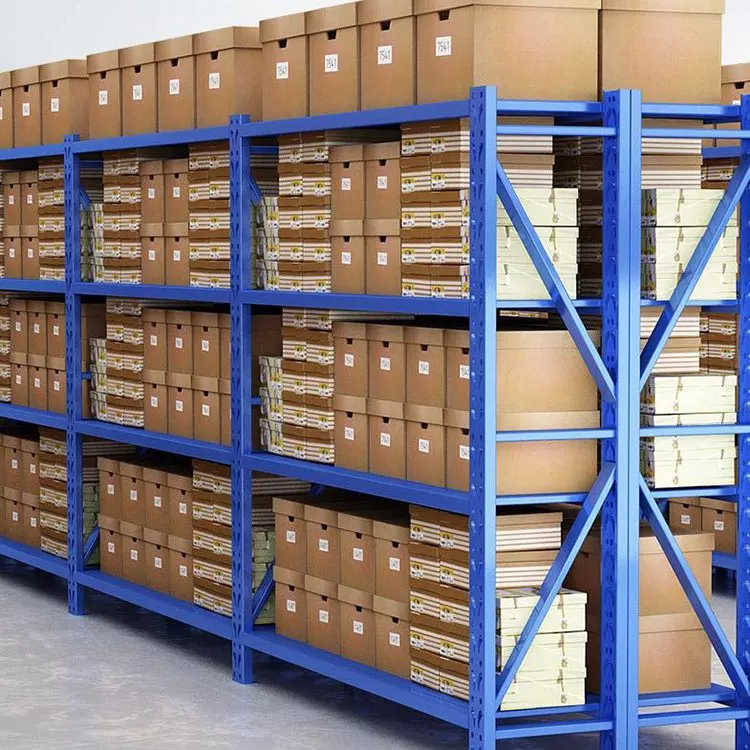
Warehouse medium duty shelving

The Product We Were Quoting

The customer was looking for a standard industrial steel shelving unit with the following dimensions:

  • Size: L2000 × W600 × H2000 mm
  • Levels: 4 levels
  • Load capacity: 300 kg per level
  • Application: Commercial and warehouse storage
  • Structure: Boltless / assembled steel shelving

Our standard configuration used the following materials:

ComponentOur Specification
Upright80 × 40 × 1.0 mm
Beam60 × 40 × 1.0 mm
Shelf panel0.5 mm
Shelf reinforcement4 welded reinforcement ribs underneath
Rated capacity300 kg per level

For us, these specifications were not simply numbers written on a quotation.

They represented the actual construction of the product.

But the competitor’s sample revealed a very different structure.

These prices are general reference ranges only. The final warehouse rack price depends on your specific project requirements.

A complete pallet racking project usually includes:

  • Rack structure
  • Upright frames and beams
  • Wire decking or pallet supports
  • Safety accessories
  • Anchoring systems
  • Transportation
  • Installation
  • Engineering design

For international warehouse projects, additional costs such as ocean freight, import duties, and local installation labor should also be considered.

What Did the Cheaper Shelving Actually Use?

After the customer’s sample arrived at his freight forwarder’s warehouse, the product was inspected and compared with our specifications.

The difference became obvious.

The cheaper supplier’s shelving used approximately:

ComponentCheaper Sample
Upright75 × 35 × 0.6 mm
Beam60 × 40 × 0.6 mm
Shelf panel0.28 mm
Shelf reinforcementSignificantly reduced
Overall product weightApproximately one-third lighter

The most important difference was not the external appearance.

From several meters away, the two shelving units could look relatively similar.

The difference became obvious only when the products were measured, disassembled, and inspected.

This is exactly why comparing steel shelving quotations only by dimensions and price can be misleading.

Two products can both be described as:

L2000 × W600 × H2000 mm, 4 levels, 300 kg per level

while having very different material specifications.

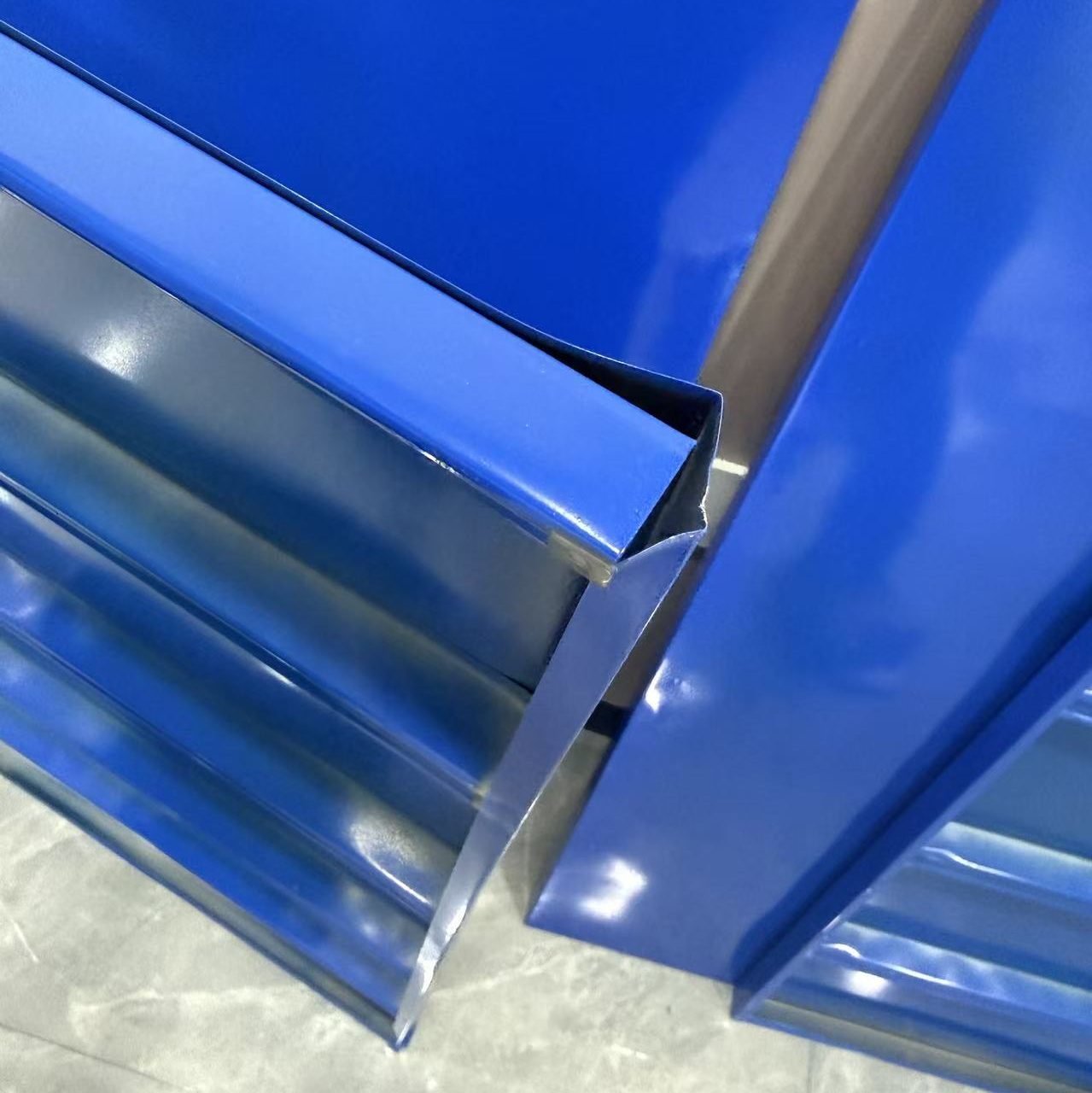
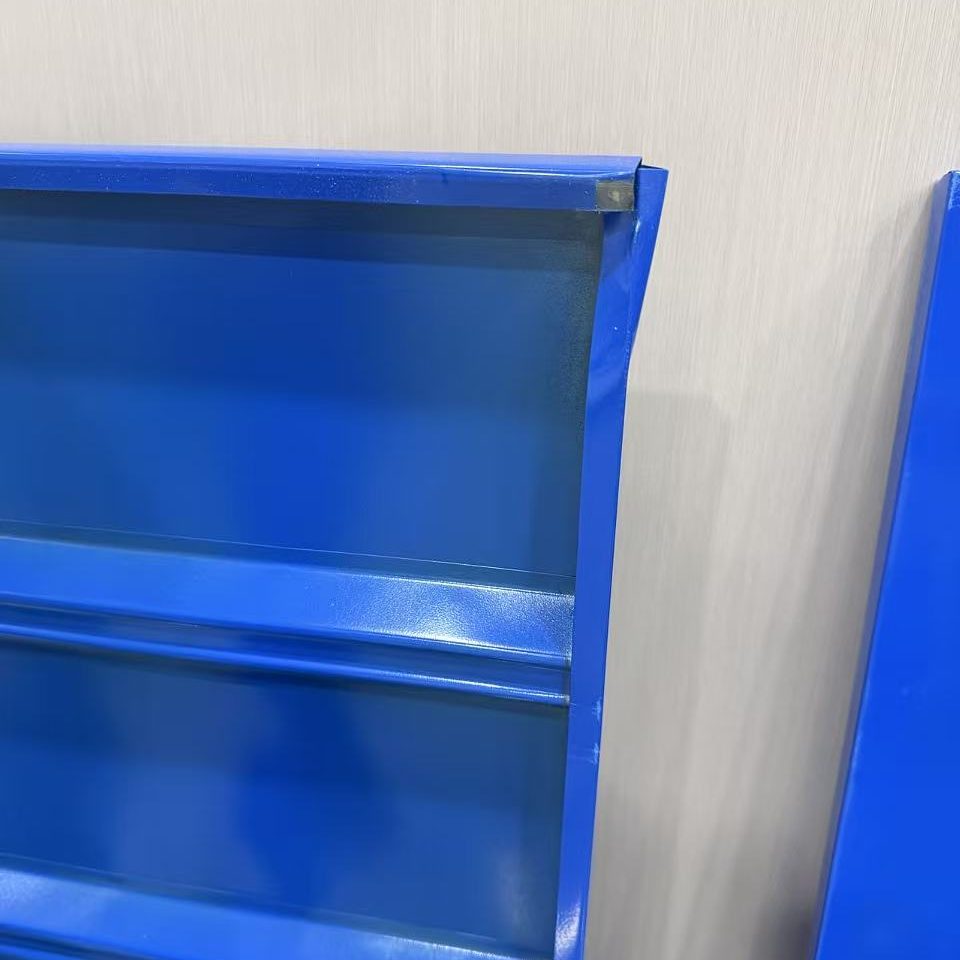
poor welding quality on steel shelving sample

deformed steel shelving panel after unpacking

1. Steel Thickness Makes a Major Difference

One of the biggest differences was the thickness of the steel.

Our upright was:

80 × 40 × 1.0 mm

The competitor’s upright was:

75 × 35 × 0.6 mm

The competitor’s beam was also only 0.6 mm thick, compared with our 1.0 mm beam.

That difference may look small on paper.

But 1.0 mm and 0.6 mm are not the same material specification.

A shelving system is a structural product. Its performance depends on the combination of steel grade, section geometry, thickness, reinforcement, connections, manufacturing quality, and the way the load is distributed.

Steel thickness is therefore one of the specifications that buyers should verify rather than simply accepting a supplier’s stated load capacity.

In general, reducing material thickness is one of the most straightforward ways to reduce the amount of steel used in each unit.

And less steel means:

Lower product weight → lower material consumption → lower manufacturing cost.

That may explain part of a very low quotation.

2. The Shelf Panel Was Only 0.28 mm Thick

The difference became even more significant when we inspected the shelf panels.

Our standard shelf panel was 0.5 mm thick, with four welded reinforcement ribs underneath.

The competitor’s sample used a shelf panel of only 0.28 mm.

This is a substantial difference in material usage.

The shelf is the part that directly receives the stored goods. Its ability to maintain its shape depends not only on the nominal load rating but also on the panel thickness, reinforcement structure, span, support points, and manufacturing process.

For a distributor, this is particularly important.

A product may be advertised as having a certain load capacity, but the actual construction should be checked before placing a large resale order.

This is why we strongly recommend that importers and distributors inspect a physical sample before committing to a full container order, especially when comparing suppliers with dramatically different prices.

3. Reinforcement Is Not Just an Optional Detail

Another important difference was the reinforcement underneath the shelf.

Our shelf design uses four welded reinforcement ribs underneath the shelf panel.

These ribs increase the structural support of the shelf and help the panel maintain its shape under load.

The competitor’s sample had a much lighter construction.

When the sample was unpacked and inspected, the difference was no longer theoretical.

The customer could physically see the difference in the structure.

For steel shelving, reinforcement should therefore be considered as part of the overall specification rather than as a cosmetic feature.

A quotation that simply states:

“300 kg per shelf”

does not tell the buyer everything they need to know.

You should also ask:

  • What is the shelf thickness?
  • What is the reinforcement structure?
  • How many reinforcement ribs are used?
  • Are the ribs welded or mechanically fixed?
  • What is the beam thickness?
  • What is the upright thickness?
  • How is the load capacity tested?
  • Is the stated capacity per shelf or per unit?
  • What safety factor is used?

These questions can reveal major differences between apparently similar products.

4. The Weight Difference Revealed the Real Cost Difference

One of the clearest signs was the overall product weight.

The competitor’s shelving unit was approximately one-third lighter than ours.

This is an important observation when comparing steel shelving suppliers.

If two products have almost identical external dimensions but one is dramatically lighter, buyers should investigate why.

There may be legitimate design differences.

But there may also be substantial differences in:

  • Steel thickness
  • Steel section size
  • Reinforcement
  • Number of structural components
  • Welding
  • Back support
  • Shelf construction
  • Connection design

For steel products, weight is not the only indicator of quality, but it is an important data point.

A simple question can often help:

“What is the actual net weight of one complete shelving unit?”

This is much more useful than comparing quotations based only on the product name.

5. The Problems Became Obvious After the Sample Was Unpacked

The biggest surprise came after the customer’s freight forwarder unpacked the sample.

Some of the welded areas on the shelf were already disconnected.

The edges of the shelf panels were visibly deformed.

The customer sent us photographs of the sample and was extremely dissatisfied with what he had received.

At that point, the original price comparison no longer mattered.

The customer was no longer comparing:

Supplier A: $X

versus

Supplier B: $Y

He was comparing two completely different products.

This is an important lesson for importers:

A cheap quotation is only cheap if the product actually meets the required specification.

If the product fails during assembly, transportation, installation, or use, the initial price advantage can quickly disappear.

Why Is Extremely Cheap Steel Shelving Risky for Distributors?

For a distributor, product quality has an additional dimension.

You are not simply buying a shelving unit for your own warehouse.

You are importing it into your country and selling it to your customers.

That means the product becomes part of your reputation.

Imagine a distributor imports 500 or 1,000 shelving units.

If the supplier saves money by reducing the steel thickness, reducing reinforcement, or cutting corners in welding, the distributor may initially make a higher margin.

But what happens when the end customers start complaining?

The distributor may have to deal with:

  • Product returns
  • Replacements
  • Refunds
  • Customer complaints
  • Installation problems
  • Damaged goods
  • Reputation damage
  • Additional transportation costs
  • After-sales service

The supplier may be thousands of kilometers away.

The distributor, however, is the company facing the end customer directly.

That is why supplier selection is part of risk management, not simply price negotiation.

A Low Price Does Not Always Mean a Better Deal

When comparing steel shelving suppliers, it is tempting to ask:

“Can you match the competitor’s price?”

But a better question is:

“Are we comparing exactly the same specification?”

Before comparing quotations, make sure the following items are identical:

Steel Shelving Comparison Checklist

Dimensions

  • Overall length
  • Width
  • Height
  • Number of levels

Load Capacity

  • Load per shelf
  • Uniformly distributed load or point load
  • Required safety factor
  • Tested or calculated capacity

Steel Material

  • Upright section size
  • Upright thickness
  • Beam section size
  • Beam thickness
  • Shelf thickness
  • Reinforcement thickness

Construction

  • Number of reinforcement ribs
  • Welding method
  • Connection structure
  • Bracing structure
  • Foot plates
  • Shelf supports

Product Weight

  • Net weight per unit
  • Gross weight per unit
  • Total container loading weight

Surface Treatment

  • Powder coating thickness
  • Pretreatment
  • Coating quality
  • Color specification

If these specifications are not the same, the quotations are not directly comparable.

How Can a Distributor Protect Himself When Buying from China?

If you are importing steel shelving from China for resale, we recommend a simple process.

Step 1: Ask for a Detailed Specification

Do not accept a quotation that only says:

“Heavy-duty shelving, 300 kg per level.”

Ask for the actual material specifications.

Step 2: Ask for Product Weight

Request the net weight of one complete unit.

This provides an additional reference when comparing similar products.

Step 3: Order a Sample

A sample is much cheaper than discovering quality problems after importing a full container.

Step 4: Inspect the Sample

Check:

  • Steel thickness
  • Section dimensions
  • Shelf reinforcement
  • Welding quality
  • Surface finish
  • Connections
  • Overall dimensions
  • Product weight

Step 5: Compare the Physical Product With the Quotation

This is extremely important.

Do not assume that the sample is automatically identical to the mass-production product.

Your purchase order should clearly state the agreed specifications.

Step 6: Confirm Quality Before Mass Production

For larger orders, consider factory inspection or third-party inspection before shipment.

This is especially valuable for distributors who will sell the products under their own business name.

What Happened With Our Customer?

After the competitor’s sample was inspected, the customer came back to us with the photographs.

He was no longer asking us to reduce our price.

Instead, he wanted to understand the differences between the two products.

We supplied another sample according to our original specification:

L2000 × W600 × H2000 mm

4 levels

300 kg per level

80 × 40 × 1.0 mm uprights

60 × 40 × 1.0 mm beams

0.5 mm shelf panels

Four welded reinforcement ribs underneath each shelf

The customer inspected the sample and confirmed that the construction met his requirements.

After the sample inspection was completed, he placed a 40HQ container order with Omni-Racking.

The final decision was no longer based on who offered the lowest initial quotation.

It was based on whether the supplier could provide a product that the distributor could confidently sell to his own customers.

Our product packaging

40HQ container loaded with steel shelving

Don't Compare Steel Shelving by Price Alone

This experience reinforced an important principle for us:

When a steel shelving quotation looks unusually cheap, don’t immediately assume that you have found a better supplier.

First ask:

What specification makes this price possible?

If the steel thickness, section size, reinforcement, welding, product weight, and manufacturing quality are all comparable, then a lower price may indeed represent better purchasing efficiency.

But if the supplier achieves a much lower price by using substantially less steel and a lighter construction, then you are not comparing the same product.

For distributors importing from China, a physical sample inspection can reveal more than dozens of emails about price.

Measure the steel.

Weigh the product.

Inspect the welding.

Check the reinforcement.

Compare the actual construction with the quotation.

And most importantly:

Don’t sacrifice long-term customer trust for a short-term price advantage.

At Omni-Racking, we believe that a successful supplier relationship is not built around being the cheapest quotation.

It is built around clear specifications, honest communication, consistent manufacturing quality, and products that our customers can confidently sell in their own markets.

If you are sourcing steel shelving, warehouse shelving, pallet racking, or other storage systems from China, we are happy to provide detailed specifications, samples, and customized solutions for your market.

Contact Omni-Racking to discuss your shelving requirements and request a detailed quotation.

Have a Similar Project in Mind?

Tell us your warehouse dimensions and storage needs — we'll design a custom solution within 24 hours.

  • 8 月, 周二, 2026

Understanding CIF Quotes: Hidden Costs Importers Should Know Before Buying from China

BLOG · OCEAN FREIGHT COST

Understanding CIF Quotes: Hidden Costs Importers Should Know Before Buying from China

By Admin · August 25, 2026 · Home › News › Ocean Freight Cost

Introduction

When importing products from China, many buyers focus on one number: the product price.

However, the real purchasing cost is not only the factory price or CIF quotation. A quotation that looks attractive at first may become much higher if some important charges are not clearly explained.

As a supplier working with overseas customers, we recently experienced a situation that reminded us how important transparent quotations are.

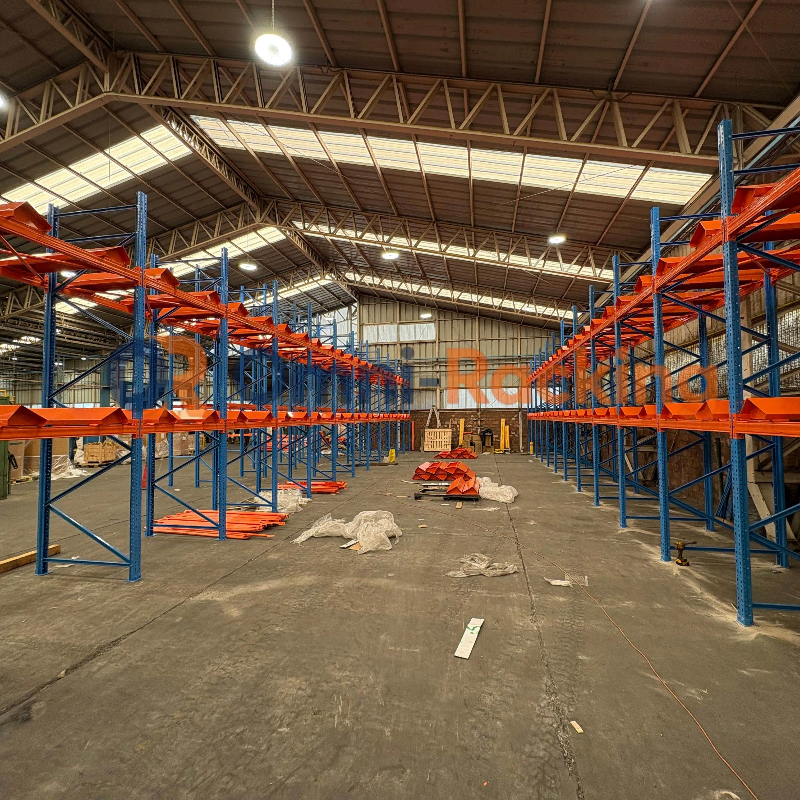
Warehouse pallet racking system

A Real Example: Why a Low Shipping Quote May Not Be the Real Cost

Recently, we helped a customer compare the total cost of importing warehouse equipment from China.

Because the customer needed to calculate the final landed cost per unit, we requested shipping quotations for different container options and asked for a complete CIF calculation.

One forwarder provided a very competitive ocean freight rate quickly.

However, after checking the details, we found that several charges were not included in the initial quotation, including:

  • Origin port handling charges
  • Export customs declaration fees
  • Documentation fees
  • Telex release charges
  • Other local export-related costs

Although the ocean freight itself looked lower, the final shipping cost was not necessarily cheaper after adding all necessary charges.

This experience showed us that a shipping quotation is only meaningful when all related costs are clearly listed.

What Costs Are Usually Included in a CIF Price?

Many buyers misunderstand CIF.

CIF (Cost, Insurance and Freight) normally includes:

1. Product Cost

The price of the goods supplied by the manufacturer or exporter.

2. Export-related Costs in China

Depending on the supplier and shipping arrangement, these may include:

  • Inland transportation from factory to port
  • Export customs clearance
  • Port handling charges
  • Documentation fees

3. Ocean Freight

The transportation cost from the Chinese port to the destination port.

4. Insurance

Marine cargo insurance required under CIF terms.

However, buyers should always confirm exactly what is included because different suppliers or forwarders may define quotations differently.

Why Transparent Quotations Matter for B2B Buyers

1. Rack Height and Warehouse Layout Design

For distributors and warehouse solution providers, calculating landed cost is critical.

A small difference in hidden charges can directly affect:

  • Final selling price
  • Profit margin
  • Inventory planning
  • Purchasing decisions

A professional supplier should help customers understand:

✔ The real total cost
✔ Potential additional charges
✔ The most suitable shipping solution
✔ The best balance between price and reliability

How to Avoid Unexpected Import Costs from China

Before placing an order, buyers should ask suppliers:

  1. Does the quotation include all export charges?
  2. Are customs declaration and documentation included?
  3. Is insurance included?
  4. Are destination charges included or excluded?
  5. What is the estimated final landed cost?

Clear communication before shipment can prevent expensive surprises later.

Our Approach at Omni-Racking

At Omni-Racking, we understand that overseas purchasing involves much more than supplying products.

For warehouse equipment such as pallet racking, mezzanine floors, wire mesh decking, and storage solutions, we aim to provide not only competitive pricing but also transparent communication and practical support.

Because a successful international partnership is built on trust, not just the lowest quotation.

Have a Similar Project in Mind?

Tell us your warehouse dimensions and storage needs — we'll design a custom solution within 24 hours.

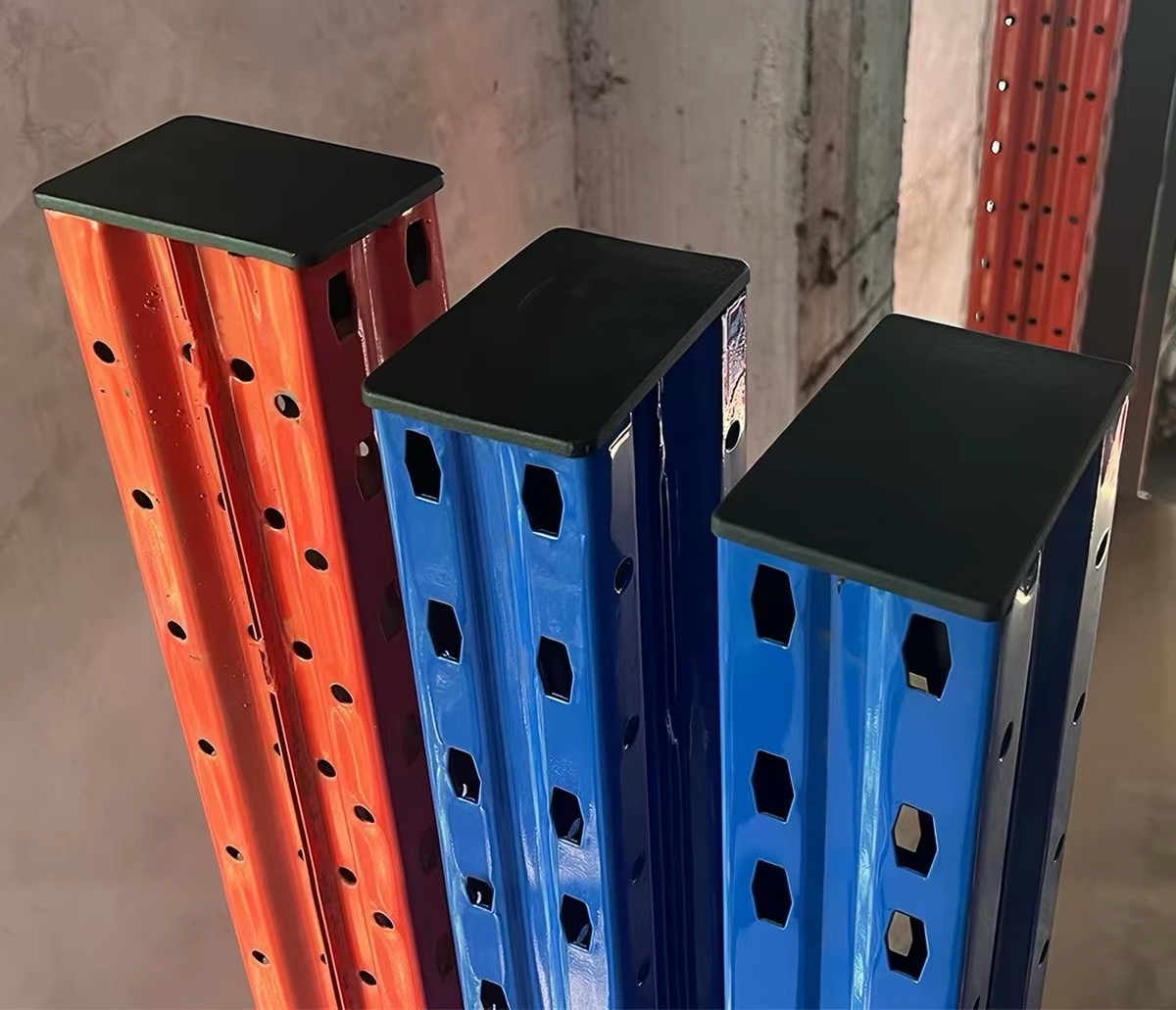
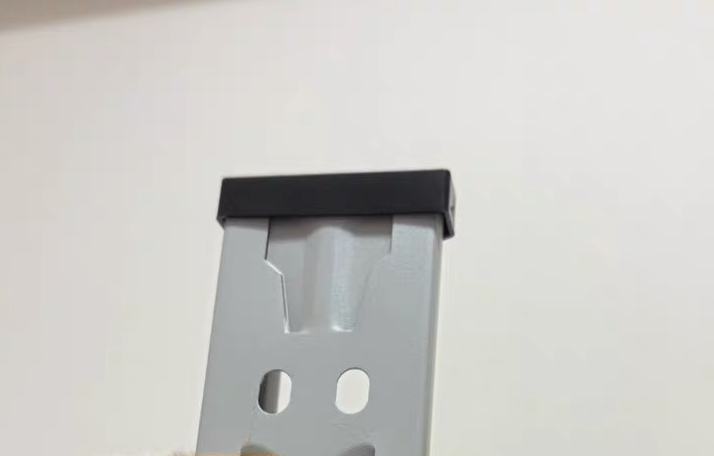
plastic protective end caps installed on pallet racking upright columns for warehouse safety
  • 8 月, 周五, 2026

Why Pallet Rack Upright End Caps Matter: A Small Safety Detail for Safer Warehouse Operations

BLOG · WAREHOUSE DESIGN

Why Pallet Rack Upright End Caps Matter: A Small Safety Detail for Safer Warehouse Operations

By Admin · August 14, 2026 · Home › News › Pallet Racking Safety

When companies purchase pallet racking systems, most buyers focus on important factors such as:

  • Load capacity
  • Steel thickness
  • Rack height
  • Storage efficiency
  • Price

However, warehouse safety is not only determined by the main structure. Small design details can also make a significant difference in daily warehouse operations.

One commonly overlooked safety detail is the pallet rack upright end cap.

For every pallet racking project, Omni-Racking provides protective plastic end caps for rack upright columns to reduce potential injury risks during installation and warehouse operation.

plastic protective end caps installed on pallet racking upright columns for warehouse safety

Warehouse pallet racking system

What Are Pallet Rack Upright End Caps?

Pallet rack upright columns are the vertical structural components that support the entire racking system.

During manufacturing, cutting, punching, and forming processes, the end section of the upright profile may have relatively sharp edges.

Without proper protection, exposed metal edges may create potential safety risks during:

  • Rack installation
  • Warehouse maintenance
  • Daily inventory operations

A pallet rack upright end cap is a specially designed plastic cover installed on the top or exposed end section of the upright column.

Its purpose is to:

  • Cover sharp metal edges
  • Reduce accidental contact injuries
  • Improve overall rack appearance
  • Provide a more professional warehouse environment

Why Rack Installation Safety Should Not Be Ignored

During pallet rack installation, workers frequently handle steel components manually.

Unlike finished consumer products, warehouse racking components are made from heavy-duty steel profiles, including:

  • Upright frames
  • Horizontal beams
  • Bracing components
  • Support accessories

During assembly, workers may experience situations such as:

  • Carrying upright frames by hand
  • Adjusting rack positions
  • Installing beams at different heights
  • Working in limited warehouse spaces

If exposed steel edges are not properly protected, accidental scratches or cuts may occur.

Although these injuries may seem minor, preventing unnecessary workplace risks is an important part of professional warehouse management.

Pallet Rack Upright End Caps for Warehouse Safety

Pallet Rack Upright End Caps for Warehouse Safety

Omni-Racking Safety Detail: Protective Plastic End Caps Included With Every Project

At Omni-Racking, we believe a complete pallet racking solution should include not only structural strength but also attention to operational safety.

For every pallet racking project, we can provide plastic protective caps for upright columns.

These protective accessories help:

1. Improve Worker Safety

The plastic cover creates a smooth protective surface and reduces direct contact with exposed metal edges.

This provides additional protection during:

  • Installation
  • Inspection
  • Maintenance

2. Improve Warehouse Appearance

A professional warehouse is not only about storage capacity.

Clean finishing details, including protected rack components, create a safer and more organized working environment.

3. Reduce Long-Term Safety Concerns

Warehouses operate continuously with:

  • Forklift drivers
  • Warehouse operators
  • Maintenance workers
  • Inventory staff

Small protective components can help reduce avoidable safety risks during long-term operation.

More Than Just Manufacturing: Understanding Real Warehouse Applications

A reliable pallet racking supplier should understand how products are used after delivery.

The rack system is not only installed once and forgotten.

It becomes part of daily warehouse operations.

That is why professional suppliers should consider:

  • Installation safety
  • Operator experience
  • Maintenance requirements
  • Warehouse environment

At Omni-Racking, our goal is to provide complete warehouse storage solutions, including:

  • Pallet racking systems
  • Medium duty shelving
  • Mezzanine floor systems
  • Warehouse safety accessories
  • Customized storage solutions

Safety Accessories for a Complete Pallet Racking System

Depending on warehouse requirements, additional safety accessories may include:

  • Upright protectors
  • Rack end barriers
  • Wire mesh decking
  • Safety panels
  • Row spacers
  • Column guards

These accessories work together to improve warehouse safety and protect both employees and storage equipment.

Choosing a Pallet Racking Supplier Who Pays Attention to Details

When comparing pallet racking suppliers, price is only one consideration.

A professional supplier should also focus on:

  • Product quality
  • Structural design
  • Safety features
  • Installation guidance
  • Project experience

Small details often reflect a supplier’s understanding of real warehouse environments.

From engineering design to production details, Omni-Racking provides reliable pallet racking solutions designed for safe and efficient warehouse operations.

Need a Safer Pallet Racking Solution?

If you are planning a warehouse storage project and looking for a pallet racking system designed with safety and practicality in mind, our team can provide:

  • Warehouse layout design
  • Rack configuration recommendations
  • Safety accessory solutions
  • Customized quotations

Contact Omni-Racking for a professional warehouse storage solution.

Have a Similar Project in Mind?

Tell us your warehouse dimensions and storage needs — we'll design a custom solution within 24 hours.

  • 8 月, 周五, 2026

Custom Steel Mezzanine Floor for Electrical Cable Industry Warehouse in Chile | 800kg/m² Heavy Duty Platform Solution

BLOG · WAREHOUSE DESIGN

Custom Steel Mezzanine Floor for Electrical Cable Industry Warehouse in Chile | 800kg/m² Heavy Duty Platform Solution

By Admin · August 14, 2026 · Home › News › Warehouse Mezzanine Floor

Project Overview

With the rapid growth of the electrical cable industry, warehouse operators are facing increasing challenges in maximizing storage capacity while maintaining efficient material handling operations.

For this Chilean electrical cable manufacturer, the existing warehouse space was unable to meet the growing demand for raw material storage and finished product management. Instead of expanding the building area, the customer decided to utilize the unused vertical space by installing a customized heavy-duty steel mezzanine floor system.

Omni-Racking provided a complete warehouse storage solution, including:

  • Customized steel mezzanine floor design
  • Structural load calculation
  • Heavy-duty support columns
  • Upper-level medium-duty shelving system
  • Compliance documentation for local approval
  • Export documents including Certificate of Origin

The final solution created additional warehouse storage space while ensuring structural safety and compliance with Chilean project requirements.

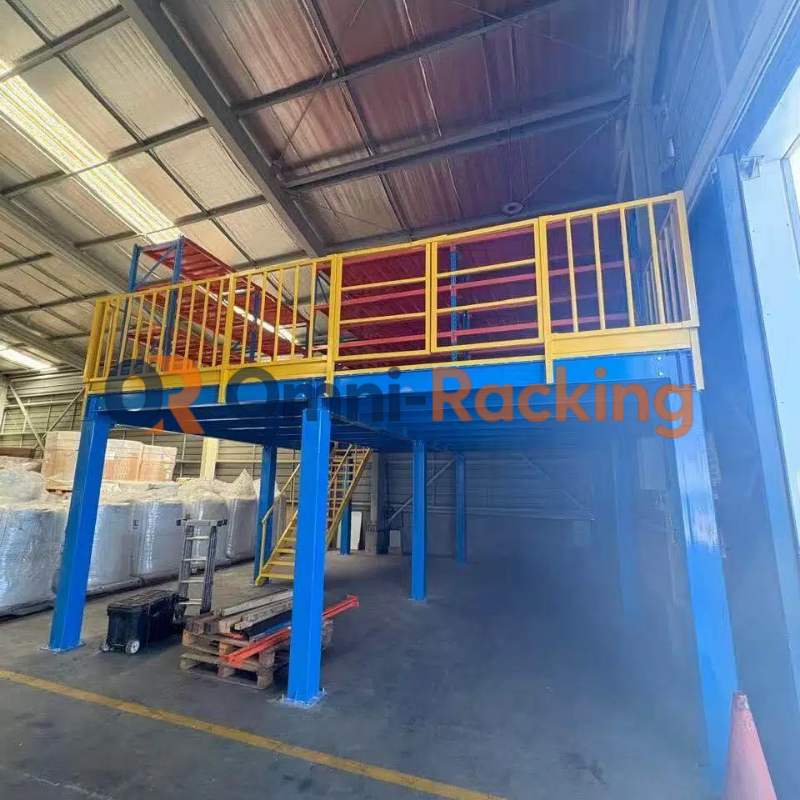
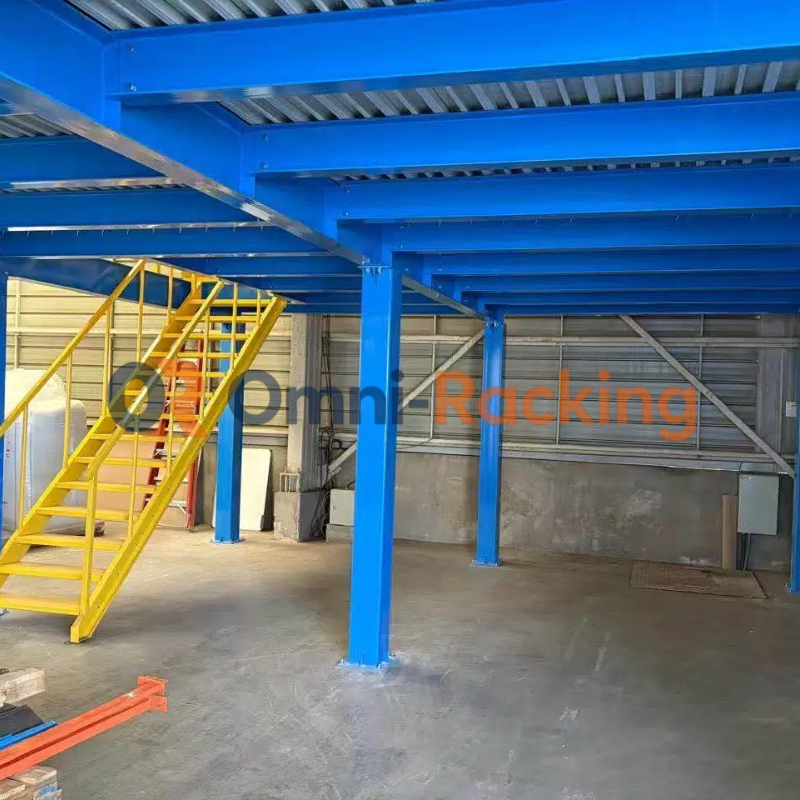
Warehouse mezzanine floor with shelving system

Project Challenges

1. High Load Requirement for Industrial Storage

Unlike standard warehouse mezzanine applications, this project required a much higher load capacity.

The customer needed the mezzanine floor to support:

800kg/m² uniformly distributed load capacity

The platform was designed for storing electrical cable-related products, which are typically heavy and require stable long-term loading performance.

To meet this requirement, Omni-Racking selected reinforced structural components, including:

  • Heavy-duty steel beams
  • Strengthened floor structure
  • Thick steel support columns
  • Optimized load distribution design

2. Customized Structure for Electrical Cable Warehouse Operations

Electrical cable warehouses usually require:

  • Large storage capacity
  • Easy access to inventory
  • Efficient picking operations
  • Safe movement of workers and materials

Instead of simply increasing rack height, the customer chose a mezzanine floor solution to create a two-level storage area.

The upper level was equipped with medium-duty shelving systems, providing flexible storage for smaller cable accessories, components, and warehouse items.

This combination allowed the customer to achieve:

  • Higher warehouse utilization
  • Better product organization
  • Improved picking efficiency
  • Reduced investment compared with warehouse expansion

Warehouse mezzanine floor with shelving system

Heavy-Duty Steel Structure Design

Because of the high loading requirement, structural safety was the most important consideration during the design process.

For this project, Omni-Racking specially selected:

Steel Columns with More Than 6.0mm Thickness

Compared with standard mezzanine structures, the customer required a stronger and more durable solution.

The project used:

  • Steel columns with thickness over 6.0mm
  • Reinforced connection points
  • Heavy-duty structural beams
  • Professional load calculation

The strengthened structure provides excellent stability and long-term performance under continuous industrial usage.

Supporting Documentation for Chile Project Approval

For international warehouse projects, product quality is not the only consideration. Compliance documentation is also an important part of successful project delivery.

During the project preparation stage, the customer informed us that local construction approval required detailed technical documents for steel structures.

To support the customer’s installation process, Omni-Racking provided:

  • Structural calculation reports
  • Technical drawings
  • Product specifications
  • Material information
  • Quality certificates
  • ISO certification documents
  • Export documentation

These documents helped the customer complete the local approval process smoothly and obtain the required construction permission before installation.

For steel structure projects in Chile, technical requirements and calculation documentation are an important part of the approval process, with relevant Chilean standards covering areas such as structural steel design and construction execution.

Export Support: Certificate of Origin for Customs Clearance

As an overseas supplier, Omni-Racking understands that successful delivery requires more than manufacturing.

For this Chile project, we also provided:

Certificate of Origin (CO)

to assist the customer with:

  • Import customs clearance
  • Documentation preparation
  • Smooth international shipment process

By providing complete export documentation, we helped reduce unnecessary delays during customs procedures.

Project Result

After completing the design, documentation preparation, and manufacturing process, the customized mezzanine floor system was successfully delivered to Chile.

The final warehouse solution achieved:

✅ 800kg/m² heavy-duty loading capacity
✅ Additional storage space without warehouse expansion
✅ Combination of mezzanine platform and shelving system
✅ Reinforced structure for industrial applications
✅ Complete technical documentation for approval
✅ Smooth customs clearance support

The customer successfully obtained installation approval and prepared the warehouse for efficient daily operations.

Warehouse mezzanine floor with shelving system

Why Choose a Customized Mezzanine Floor Solution?

A warehouse mezzanine floor is not simply an additional platform. A properly designed system must consider:

  • Warehouse dimensions
  • Storage requirements
  • Load capacity
  • Material handling process
  • Safety regulations
  • Local approval requirements

Working with an experienced warehouse solution provider helps companies avoid structural risks and maximize their available space.

Omni-Racking provides customized mezzanine floor systems, pallet racking solutions, and warehouse storage designs for international customers across different industries.

Need a Customized Warehouse Mezzanine Floor Design?

If you are planning to increase warehouse capacity without expanding your building area, a customized steel mezzanine floor can be an efficient solution.

Send us your:

  • Warehouse dimensions
  • Required loading capacity
  • Storage requirements
  • Location

Our engineering team can provide a customized layout design and technical solution for your project.

Contact Omni-Racking for a free warehouse mezzanine floor consultation.

Have a Similar Project in Mind?

Tell us your warehouse dimensions and storage needs — we'll design a custom solution within 24 hours.

  • 8 月, 周四, 2026

How Much Does a Pallet Racking System Cost in 2026? Real Warehouse Rack Price Guide

BLOG · WAREHOUSE DESIGN

How Much Does a Pallet Racking System Cost in 2026? Real Warehouse Rack Price Guide

By Admin · August 14, 2026 · Home › News › Pallet Racking Cost

If you are planning a new warehouse, expanding storage capacity, or replacing an outdated storage system, one of the first questions you may ask is:

How much does a pallet racking system cost in 2026?

The answer depends on many factors, including warehouse size, rack type, storage height, load capacity, steel specifications, installation requirements, and shipping costs.

A small warehouse with a few hundred pallet positions may require a relatively simple selective pallet racking system, while a large distribution center may need a high-bay heavy-duty pallet rack system with thousands of storage locations.

As a professional pallet racking supplier providing warehouse storage solutions for customers worldwide, we have found that understanding the cost structure before purchasing helps companies avoid unnecessary expenses and choose the right racking solution.

This guide explains the average pallet racking cost in 2026, the factors affecting warehouse rack prices, real project cost considerations, and how to build an accurate warehouse storage budget.

Warehouse pallet racking system

2026 Pallet Racking System Cost Overview

In 2026, the average cost of a pallet racking system typically ranges from:

Rack Type & Specification 2026 Price Range (Per Pallet Position) Core Features & Application
Standard Selective Pallet Rack (Medium-Duty) $35 – $200+ 2,000–4,000 lbs per level; 3–6m standard height; suitable for general goods, small & medium warehouses; most cost-effective daily storage solution
Heavy-Duty Selective Pallet Rack $100 – $350 5,000–10,000 lbs per level; thick steel frame; reinforced connection points; for heavy industrial goods and bulk inventory storage
High-Density Specialized Rack (Drive-in / Pushback / Pallet Flow) $120 – $550 Custom structural design; high space utilization; suitable for large logistics warehouses and high-volume batch storage; customized height & load capacity
High-Bay Tall Warehouse Rack (8–18m) $180 – $480 Reinforced bracing & structural calibration; maximize vertical space; meet industrial safety standards; for large-scale high-ceiling warehouses

* Note: All prices are raw material quotes. Final pallet racking cost includes installation, shipping, safety accessories and customization fees (total budget increases 30%–50% on average). Contact us for a free warehouse layout design for accurate tailored pricing.

These prices are general reference ranges only. The final warehouse rack price depends on your specific project requirements.

A complete pallet racking project usually includes:

  • Rack structure
  • Upright frames and beams
  • Wire decking or pallet supports
  • Safety accessories
  • Anchoring systems
  • Transportation
  • Installation
  • Engineering design

For international warehouse projects, additional costs such as ocean freight, import duties, and local installation labor should also be considered.

Example: Estimated Pallet Racking Project Budget

To better understand pallet racking costs, here is an example of a typical warehouse project.

Example Project:

Warehouse size:
48m × 15m

Storage requirement:
784 pallet positions

Pallet size:
1200 × 1000mm

Pallet load:
1000kg per pallet

Rack height:
Approximately 7–8 meters

System:
Heavy-duty selective pallet racking

The final project cost is determined by:

  • Number of rack bays
  • Upright specifications
  • Beam capacity
  • Warehouse height
  • Forklift aisle requirements
  • Safety accessories
  • Shipping distance

A professional supplier will first analyze your warehouse layout and pallet specifications before recommending the most cost-effective rack structure.

6 Key Factors That Determine Pallet Racking Cost

1. Rack Height and Warehouse Layout Design

Warehouse height is one of the biggest factors affecting pallet racking cost.

A standard warehouse with 3–6 meter racks requires less steel material compared with high-bay storage systems.

For warehouses with:

  • 8–12 meter rack height
  • Narrow aisle layouts
  • High-density storage requirements

the rack structure requires stronger upright frames, additional bracing, and more precise engineering calculations.

Although taller racks have higher initial costs, they allow companies to maximize vertical storage space and reduce warehouse expansion costs.

A professional warehouse layout design can help balance:

  • Storage capacity
  • Forklift operation
  • Safety requirements
  • Total investment

2. Load Capacity Requirements

The weight of stored goods directly affects the rack structure.

For example:

  • Light products may only require medium-duty shelving
  • Standard pallets may require 1,000–2,000kg per pallet capacity
  • Heavy industrial materials may require 3,000kg+ pallet capacity

Higher load requirements increase:

  • Upright column thickness
  • Beam profile size
  • Steel consumption
  • Manufacturing cost

Choosing a rack system with insufficient capacity creates safety risks, while excessive capacity may increase unnecessary investment.

The best solution is a rack design based on your actual pallet weight and storage requirements.

3. Steel Thickness and Material Quality

Steel quality has a direct impact on warehouse rack safety and service life.

Important factors include:

  • Steel grade
  • Upright thickness
  • Beam thickness
  • Surface treatment
  • Welding quality

For humid environments, cold storage facilities, or outdoor applications, customers may require special surface treatments such as galvanized coating.

Although higher-quality steel increases initial pallet racking cost, it provides:

  • Better durability
  • Higher load stability
  • Lower maintenance requirements
  • Longer service life

4. Order Quantity and Project Scale

Project size has a significant impact on warehouse rack pricing.

Small orders usually have higher unit costs because:

  • Production setup costs are spread over fewer units
  • Packaging efficiency is lower
  • Transportation costs per rack position are higher

Large warehouse projects benefit from:

  • Bulk material purchasing
  • Optimized production
  • Better container utilization
  • Lower average cost per pallet position

For this reason, large distribution centers usually achieve a lower cost per storage location compared with small warehouses.

5. Installation and Labor Cost

Installation usually represents around 15%–35% of the total pallet racking project cost.

Professional installation includes:

  • Rack positioning
  • Frame assembly
  • Beam installation
  • Floor anchoring
  • Safety inspection

For overseas projects, installation costs vary depending on:

  • Local labor rates
  • Warehouse conditions
  • Rack height
  • Equipment requirements

A properly installed rack system improves safety and prevents future operational problems.

6. Shipping and Logistics Expenses

For international customers, shipping is an important part of total warehouse rack cost.

Pallet racks are large steel structures, meaning transportation efficiency directly affects the final price.

Factors affecting shipping costs include:

  • Shipping distance
  • Container loading efficiency
  • Steel volume
  • Port location
  • Local transportation

Experienced suppliers can optimize rack designs and container loading plans to reduce unnecessary shipping expenses.

Additional Costs Often Overlooked by Buyers

Many buyers only compare the rack material quotation but forget additional project costs.

Common additional expenses include:

Safety Accessories

Examples:

  • Column protectors
  • Wire mesh decking
  • Safety barriers
  • Pallet supports

Warehouse Engineering

Some projects require:

  • CAD layout design
  • Structural calculations
  • Local compliance documents

Custom Requirements

Additional costs may apply for:

  • Special colors
  • Non-standard dimensions
  • Cold storage applications
  • Seismic requirements

Including these items in your initial budget prevents unexpected cost increases later.

How to Reduce Pallet Racking Costs Without Sacrificing Safety

The lowest quotation is not always the most economical choice.

A better approach is optimizing the entire storage solution.

Professional rack design can help you:

1. Maximize Storage Density

A well-planned layout can increase pallet capacity without increasing warehouse area.

2. Avoid Over-Engineering

Using unnecessarily heavy rack components increases costs without improving efficiency.

3. Choose the Right Rack Type

For example:

  • Selective pallet racking for general warehouses
  • Drive-in racking for high-density storage
  • Radio shuttle racking for cold storage and high-volume operations

The right system reduces both initial investment and long-term operating costs.

Why Work With an Experienced Pallet Racking Supplier?

Choosing a pallet racking supplier is not only about finding the lowest price.

A professional supplier should provide:

  • Warehouse layout design
  • Load calculation
  • Rack engineering recommendations
  • Production quality control
  • Export experience
  • Installation guidance

With experience supplying warehouse storage solutions for international customers, Omni-Racking helps businesses design safe, efficient, and cost-effective pallet racking systems based on their actual storage needs.

Get Your Accurate Pallet Racking Cost Estimate

Because every warehouse is different, there is no universal pallet racking price.

To receive an accurate quotation, provide:

  • Warehouse dimensions
  • Warehouse height
  • Pallet size
  • Pallet weight
  • Required storage capacity
  • Forklift type
  • Project location

Our engineering team can provide a customized warehouse layout design and preliminary quotation to help you estimate your total pallet racking investment.

Contact Omni-Racking today for a free warehouse rack design and cost evaluation.

Have a Similar Project in Mind?

Tell us your warehouse dimensions and storage needs — we'll design a custom solution within 24 hours.

  • 6 月, 周一, 2026

How to Design a Pallet Racking System That Perfectly Fits Your Warehouse?

BLOG · WAREHOUSE DESIGN

How to Design a Pallet Racking System That Perfectly Fits Your Warehouse?

By Admin · June 22, 2026 · Home › News › Pallet Racking Design

When planning a new warehouse storage system, one of the most important decisions is choosing the right pallet racking layout. A well-designed selective pallet racking system can significantly increase storage capacity, improve forklift efficiency, and reduce operational costs.

Many warehouse owners focus only on the price of pallet racking. However, the real value lies in designing a warehouse racking solution that maximizes available space while ensuring safety and operational efficiency.

In this article, we’ll walk through a real warehouse pallet racking design example and explain how professional racking manufacturers create a complete warehouse racking layout based on customer requirements.

Warehouse pallet racking system

Warehouse Information and Storage Requirements

Warehouse Dimensions

Length: 48 meters
Width: 18 meters
Clear Height: 11.5 meters

Pallet Specifications

Pallet Size: 1200×1200mm
Load Capacity: 1000kg
Loaded Height: 1500mm

Handling Equipment

Counterbalance Forklift

01

Calculate the Beam Length

The first step in pallet racking design is determining the appropriate beam length. In this project, each beam level is designed to store two pallets. To allow safe forklift operation, industry standards recommend leaving clearance between pallets and rack uprights.

Recommended Clearance:
· 100mm between pallets
· 100mm between pallet and upright frame on each side

Calculation: 1200mm + 1200mm + 100mm + 100mm + 100mm = 2700mm

RECOMMENDED BEAM LENGTH

2700mm

02

RECOMMENDED RACK DEPTH

The next step is calculating the rack depth.

Since the pallet depth is 1200mm, the pallet should overhang the beams slightly on both the front and rear sides.

Industry standards typically recommend:

  • 50mm–100mm pallet overhang on each side

Therefore, the recommended frame depth is:

1000mm Rack Depth

This configuration provides:

  • Safe pallet placement
  • Better load stability
  • Reduced risk of pallet collapse
  • Improved forklift handling

RECOMMENDED RACK WIDTH

1000mm

03

RECOMMENDED UPRIGHT HEIGHT

The warehouse clear height is:

11.5 meters

To comply with fire protection systems, lighting requirements, and safety regulations, it is recommended to keep the highest load level below 11 meters.

Therefore:

Recommended Upright Height

10.5 meters (10500mm)

This height fully utilizes the available warehouse space while maintaining safe operating clearances.

RECOMMENDED UPRIGHT HEIGHT

10500mm

04

MINIMUM CLEAR HEIGHT PER LEVEL

The loaded pallet height is:

1500mm

To allow safe forklift operation, a minimum clearance of 200mm should be maintained between the top of the load and the bottom of the beam above.

Calculation:

1500mm + 200mm

= 1700mm

Therefore:

Minimum Clear Height Per Level

1700mm

This spacing ensures smooth loading and unloading operations.

RECOMMENDED HEIGHT PER LEVEL

1700mm

05

TOTAL STORAGE LEVELS

With a rack height of 10.5 meters, we can design:

  • Ground storage level
  • Five beam levels above

Total:

6 Pallet Storage Levels

This configuration is widely used in high-bay warehouses and distribution centers.

RECOMMENDED STORAGE LEVELS

6 Levels

06

MINIMUM FORKLIFT AISLE WIDTH

The customer uses a counterbalance forklift.

For safe maneuvering, the aisle width should be at least:

Minimum Forklift Aisle Width

3000mm

This allows efficient pallet handling while maximizing storage density.

RECOMMENDED FORKLIFT AISLE WIDTH

3000mm

07

TOTAL PALLET POSITIONS

Based on the warehouse dimensions:

48m × 18m

The recommended layout includes:

  • Double-deep back-to-back rack rows
  • Single rack rows along walls
  • 3000mm forklift aisles

After optimizing the warehouse floor plan, the preliminary design includes:

Rack Configuration

  • Approximately 98 rack bays
  • 5 beam levels
  • 6 pallet levels including floor storage

Each bay stores:

  • 2 pallets per level

Total pallet positions:

98 × 6 × 2

= 1176 pallet locations

TOTAL PALLET POSITIONS

1,176

Final Warehouse Pallet Racking Design Summary

48×18m

Warehouse Size (11.5m height)

2700mm

Beam Length / 1000mm Depth

98 Bays

5 Beam Levels / 6 Storage Levels

1,176

Pallet Positions (1,176 Tons Capacity)

Using 2700mm beams, 1000mm rack depth, and 10500mm upright frames across 98 rack bays, this warehouse achieves approximately 1,176 pallet positions with a total storage capacity exceeding 1,176 tons.

How to Select the Right Materials for a Pallet Racking System

One of the most common questions from warehouse managers is: “What rack specifications should I choose for 1000kg pallets?” The answer depends on load calculations, beam span, rack height, and safety factors.

For this project, load per beam level is 2 pallets × 1000kg = 2000kg per level.

Upright Frames

90×70×2.0mm / 100×70×2.0mm

Box Beams

100×50×1.5mm / 120×50×1.5mm

Why Professional Warehouse Racking Design Matters

Many businesses purchase warehouse racking based solely on price. However, poor planning often results in:

  • 6 月, 周三, 2026

Heavy-Duty Steel Mezzanine Floor for Cold Storage Warehouses: Maximize Space and Storage Efficiency

What Is a Cold Storage Mezzanine Floor?

A cold storage mezzanine floor is a raised steel platform installed inside refrigerated warehouses, cold rooms, and frozen food storage facilities. It creates additional storage or working space without expanding the building footprint, making it one of the most cost-effective solutions for increasing warehouse capacity.

Modern steel mezzanine floors are widely used in:

  • Cold storage warehouses
  • Frozen food distribution centers
  • Food processing plants
  • Pharmaceutical cold rooms
  • Logistics and distribution centers
  • Industrial refrigeration facilities

Compared with concrete structures, steel mezzanine platforms offer faster installation, greater flexibility, and lower construction costs.


Why Install a Steel Mezzanine Floor in a Cold Warehouse?

Cold storage facilities are expensive to build and operate. Every cubic meter of refrigerated space matters.

A heavy-duty steel mezzanine floor helps warehouse operators:

✓ Increase storage capacity

✓ Optimize vertical space utilization

✓ Reduce facility expansion costs

✓ Improve warehouse workflow

✓ Support pallet racking systems

✓ Create additional picking and packing areas

✓ Maximize return on cold storage investment

For warehouses with limited floor space, a custom mezzanine floor system can effectively double the usable storage area.


Heavy Load Capacity Designed for Industrial Applications

Unlike standard warehouse platforms, our cold storage mezzanine floors are engineered for high-load industrial environments.

Technical Specifications

Specification Details
Structure Type Structural Steel Mezzanine Floor
Application Cold Storage & Frozen Warehouses
Material Q235B / Q355B Structural Steel
Surface Treatment Powder Coating / Hot-Dip Galvanized
Floor Decking Steel Grating, Checkered Plate, Composite Deck
Temperature Range Suitable for Refrigerated & Frozen Environments
Static Load Capacity 1.5–2 Tons/m² (1500–2000 kg/m²)
Design Standard Customized According to Project Requirements
Installation Modular Bolt-Connected Structure

One of the key advantages is the exceptional load-bearing performance. The platform can support a static load capacity of 1.5–2 tons per square meter (1500–2000 kg/m²), making it ideal for pallet storage, industrial equipment, and high-density warehouse operations.


Key Features of Our Cold Storage Steel Mezzanine Platform

Heavy-Duty Structural Design

The steel mezzanine system is designed using high-strength structural steel to ensure long-term stability and safety under heavy loads.

Corrosion Resistance

Cold and humid environments can accelerate corrosion. Our steel platforms can be supplied with powder-coated or galvanized finishes for enhanced durability.

Customized Dimensions

Every cold warehouse has different operational requirements. We provide customized solutions including:

  • Platform height
  • Column spacing
  • Floor loading capacity
  • Staircases
  • Safety railings
  • Pallet gates
  • Conveyor integration

Fast Installation

Prefabricated steel components significantly reduce installation time compared with traditional concrete structures.

Flexible Expansion

The modular design allows future expansion or relocation as warehouse requirements change.


Applications of Heavy-Duty Mezzanine Floors in Cold Storage Facilities

Frozen Food Warehouses

Store frozen meat, seafood, vegetables, and packaged food products while maximizing vertical storage space.

Pharmaceutical Cold Rooms

Create additional storage levels for temperature-sensitive medicines and medical products.

Distribution Centers

Improve order fulfillment efficiency by separating storage, picking, and packing operations.

Refrigerated Logistics Hubs

Increase pallet positions and optimize warehouse throughput without additional building construction.


Benefits Compared with Traditional Concrete Platforms

Feature Steel Mezzanine Floor Concrete Platform
Installation Speed Fast Slow
Construction Cost Lower Higher
Expansion Flexibility Excellent Limited
Relocation Capability Possible Not Possible
Weight Lighter Heavier
Maintenance Easy More Complex
Project Downtime Minimal Longer

For most cold storage projects, steel mezzanine floors offer superior flexibility and a faster return on investment.


Safety and Compliance

Safety is critical in cold storage operations.

Our mezzanine floor systems can be equipped with:

  • Safety handrails
  • Anti-slip flooring
  • Loading gates
  • Toe boards
  • Emergency exits
  • Forklift access areas

Each structure is engineered according to project-specific load requirements and operational conditions.


Why Choose a Custom Cold Storage Mezzanine Floor?

Every warehouse has unique storage requirements. A customized steel mezzanine structure allows businesses to:

  • Increase storage density
  • Improve warehouse efficiency
  • Reduce expansion costs
  • Support heavy pallet loads
  • Maximize refrigerated storage space

Whether you operate a frozen food warehouse, cold chain logistics center, or pharmaceutical storage facility, a heavy-duty steel mezzanine floor provides a practical and long-lasting solution.

With a load capacity of up to 2 tons per square meter, our cold storage mezzanine systems deliver outstanding strength, durability, and space optimization for demanding industrial applications.


Keywords

Cold Storage Mezzanine Floor, Cold Room Mezzanine Floor, Steel Mezzanine Floor, Heavy Duty Mezzanine Floor, Industrial Mezzanine Platform, Cold Storage Steel Platform, Warehouse Mezzanine System, Heavy Load Mezzanine Floor, Mezzanine Floor for Cold Warehouse, Storage Platform, Structural Steel Platform, Industrial Storage Solution, Cold Chain Warehouse, Refrigerated Warehouse Platform, 1500kg/m² Mezzanine Floor, 2000kg/m² Load Capacity Mezzanine.

    WhatsApp Get Free Design Catalog
    WeChat
    ↑