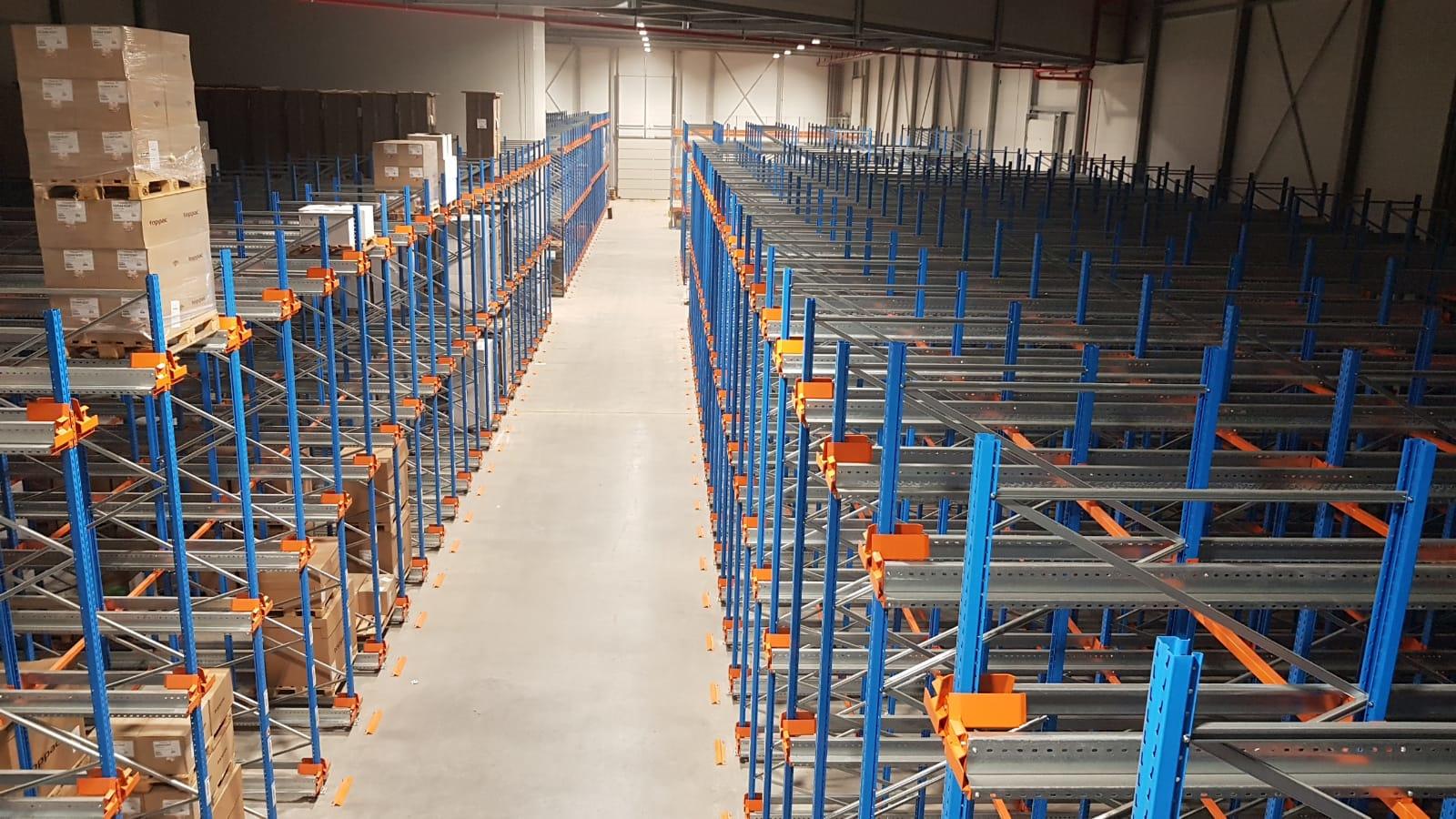
Radio Shuttle Racking System for Cold Storage Warehouse
What Is a Radio Shuttle Racking System?
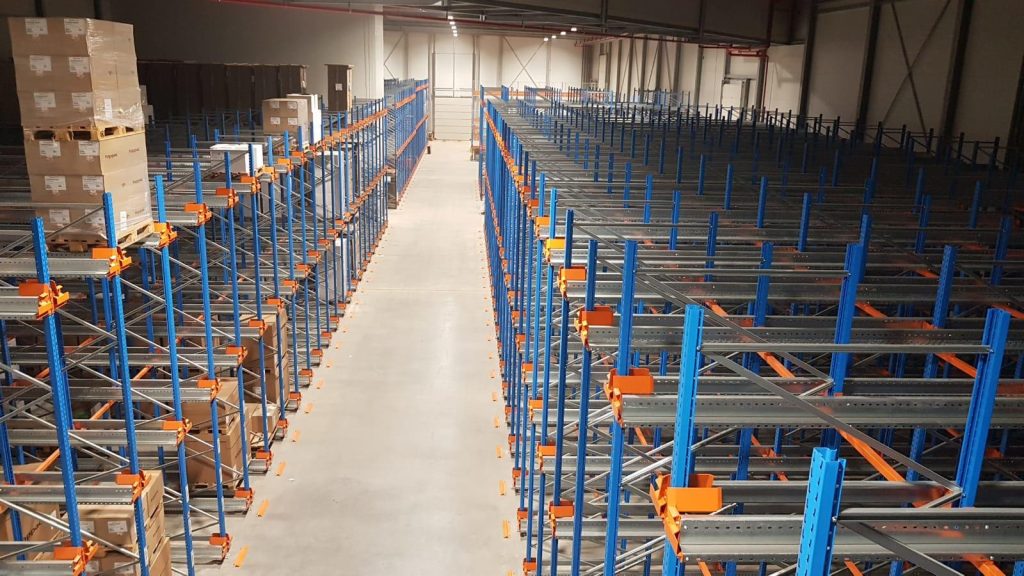
A Radio Shuttle Racking System is a high-density semi-automated storage solution designed to maximize warehouse space utilization and improve pallet handling efficiency. Instead of forklifts entering the racking lanes, a battery-powered shuttle automatically moves pallets within the rack system.
The operator simply places the pallet at the entrance of the lane, and the radio shuttle transports it to the designated storage position. This reduces forklift travel time, minimizes rack damage, and increases warehouse productivity.
Radio shuttle systems are widely used in industries such as:
- Cold storage & frozen food
- Beverage & dairy
- Logistics & distribution centers
- Pharmaceutical warehouses
- FMCG industries
Why Radio Shuttle Racking Is Ideal for Cold Storage Warehouses
Cold storage warehouses face unique operational challenges, including limited space, high energy consumption, and harsh low-temperature environments. Radio shuttle racking systems are especially suitable for cold storage because they offer:
1. Maximum Space Utilization
Cold storage construction and operating costs are extremely high. Radio shuttle systems can achieve up to 80–90% storage density by reducing aisle requirements.
More pallet positions in the same warehouse footprint means lower cost per pallet stored.
2. Reduced Forklift Operation Time
Traditional forklifts entering freezing environments continuously can lead to:
- Increased energy loss
- Slower operations
- Safety risks
- Higher maintenance costs
With radio shuttle systems, forklifts stay outside the storage lanes while the shuttle handles pallet movement automatically.
3. Faster Inbound and Outbound Operations
The automated shuttle significantly improves pallet handling efficiency, making it ideal for high-throughput cold chain logistics.
4. Improved Safety
Because forklifts do not enter the racking lanes, the risk of rack collision and product damage is greatly reduced.
5. Better Performance in Low Temperatures
Modern radio shuttles are designed to operate in cold environments as low as -25°C or even lower, making them reliable for frozen warehouses.
Maximum Storage Density
One of the biggest advantages of a radio shuttle racking system is its extremely high storage density.
Compared with conventional selective pallet racking, radio shuttle systems can increase storage capacity by 30–60%.
Key Features That Improve Density
- Deep lane storage
- Fewer forklift aisles
- Compact rack configuration
- High vertical space utilization
For businesses operating expensive cold storage facilities, maximizing cubic storage space directly improves ROI.
FIFO and LIFO Storage Modes
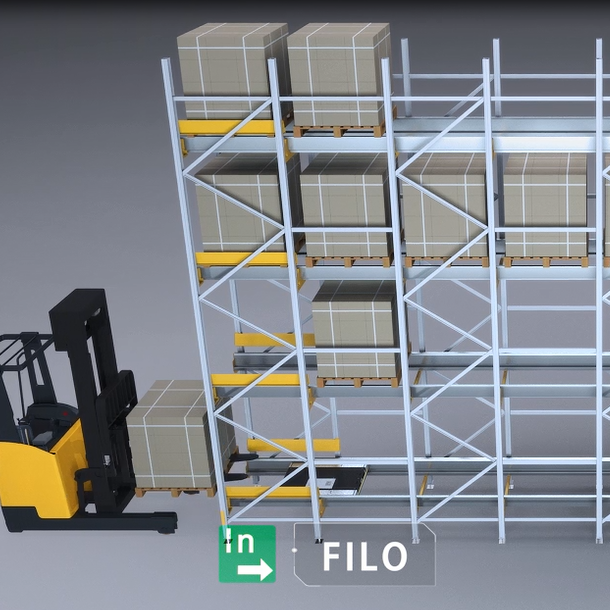
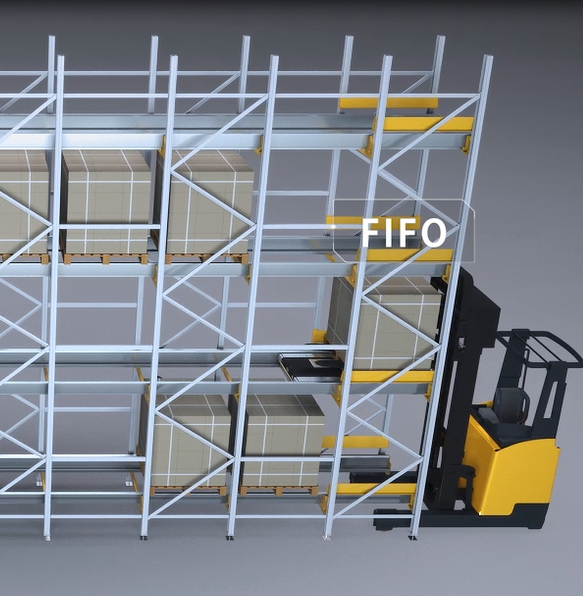
Radio shuttle racking systems support both FIFO and LIFO inventory management methods.
FIFO (First In, First Out)
FIFO is commonly used for:
- Food
- Dairy products
- Pharmaceuticals
- Perishable goods
In FIFO mode, pallets are loaded from one side and retrieved from the opposite side.
LIFO (Last In, First Out)
LIFO is suitable for:
- Non-perishable goods
- Bulk storage
- Buffer inventory
In this mode, loading and unloading occur from the same side.
The flexibility of supporting both FIFO and LIFO makes radio shuttle systems adaptable to different warehouse requirements.
Radio Shuttle Racking vs Drive-In Racking
Many warehouse operators compare radio shuttle racking with traditional drive-in racking systems. While both provide high-density storage, radio shuttle technology offers significant operational advantages.
| Feature | Radio Shuttle Racking | Drive-In Racking |
|---|---|---|
| Storage Density | Very High | High |
| Forklift Entry into Lane | No | Yes |
| Operating Speed | Fast | Moderate |
| Rack Damage Risk | Low | High |
| Labor Efficiency | High | Lower |
| Warehouse Safety | Better | Lower |
| Automation Level | Semi-Automatic | Manual |
| Cold Storage Suitability | Excellent | Good |
Drive-in systems require forklifts to enter deep storage lanes, increasing collision risks and reducing operational efficiency. Radio shuttle systems eliminate this issue through automated pallet movement.
Cost Analysis of Radio Shuttle Racking Systems
The initial investment for a radio shuttle racking system is generally higher than traditional racking systems. However, the long-term operational savings are substantial.
Initial Costs Include
- Racking structure
- Radio shuttle carts
- Charging stations
- Remote control system
- Installation
Long-Term Savings
- Lower labor costs
- Reduced rack maintenance
- Faster operations
- Improved storage capacity
- Lower energy consumption in cold storage
For large cold storage warehouses, the ROI period is often relatively short due to improved efficiency and reduced operating expenses.
Typical Applications and Case Studies
Frozen Food Warehouse
A frozen food distributor implemented a radio shuttle racking system in a -20°C warehouse and increased storage capacity by 40% while reducing forklift travel time by 50%.
Beverage Distribution Center
A beverage company adopted FIFO radio shuttle storage to improve inventory turnover and speed up outbound operations during peak seasons.
Third-Party Logistics (3PL)
A logistics provider used shuttle racking to handle high-volume pallet storage efficiently while minimizing labor requirements.
Technical Specifications
Load Capacity
Most radio shuttle systems support pallet loads ranging from:
- 500 kg to 1,500 kg
- Heavy-duty models can exceed 2,000 kg
The actual load capacity depends on pallet dimensions and rack design.
Shuttle Speed
Typical shuttle speed:
- Empty shuttle speed: up to 1.5 m/s
- Full-load speed: around 0.8–1.0 m/s
High-speed shuttle movement improves warehouse throughput significantly.
Battery Runtime
Modern lithium battery systems usually provide:
- 6–10 hours continuous operation
- Fast charging capability
- Optional spare battery replacement
Battery performance remains stable even in low-temperature environments.
Warehouse Layout Considerations
An efficient warehouse layout is essential when implementing a radio shuttle racking system.
Important Factors Include
- Pallet dimensions
- Warehouse height
- Forklift type
- Number of SKUs
- Inventory turnover rate
- FIFO or LIFO requirement
- Cold room temperature
A professional warehouse design can maximize storage efficiency while maintaining smooth operational flow.
Frequently Asked Questions (FAQ)
Is radio shuttle racking fully automated?
No. Standard radio shuttle systems are semi-automated. Forklifts place pallets at lane entrances while the shuttle moves pallets inside the rack.
Can radio shuttle systems operate in freezing temperatures?
Yes. They are specifically designed for cold storage and freezer warehouse applications.
What industries commonly use radio shuttle systems?
Food, beverage, pharmaceutical, logistics, dairy, and frozen product industries commonly use them.
How many pallets can one shuttle handle?
One shuttle can continuously move hundreds of pallets per shift depending on operational intensity and battery capacity.
Is radio shuttle racking suitable for existing warehouses?
Yes. Many existing warehouses can be upgraded with shuttle racking systems after proper layout evaluation.
Conclusion
Radio shuttle racking systems have become one of the most efficient storage solutions for cold storage warehouses. By combining high-density storage, operational efficiency, improved safety, and reduced energy loss, they help businesses optimize warehouse performance and lower long-term costs.
For companies seeking modern cold storage automation solutions, radio shuttle racking offers a highly competitive advantage in today’s fast-moving logistics and supply chain industry.