BLOG · MEDIUM DUTY SHELVING
Why Is One Steel Shelving Supplier Much Cheaper Than Another? A Real Sample Inspection Case
By Admin · August 26, 2026 · Home › News › Medium Duty Shelving Quality
When sourcing steel shelving from China, price is often one of the first factors that distributors and importers compare.
But what happens when one supplier’s quotation is significantly lower than the market level?
At first glance, a lower price may seem like a great opportunity. However, when the quoted price is even close to, or below, the estimated raw material cost of the product, it is worth asking a more important question:
Where is the cost being reduced?
We recently experienced a real case with a distributor customer who was looking for standard steel shelving for resale in his local market.
The customer initially told us that another Chinese supplier could offer a much lower price than ours. Based on the specifications and the prevailing steel price, the quotation seemed unusually low—even difficult to reconcile with the apparent raw material cost.
Rather than simply arguing about the price, the customer decided to purchase a sample from the cheaper supplier and send it to his freight forwarder in China for inspection.
What happened after the sample arrived changed the entire conversation.
The sample inspection revealed that the two shelving systems were not actually comparable products.
The difference was not simply a matter of supplier profit margin.
The difference was in the steel thickness, structural components, reinforcement, welding quality, product weight, and ultimately the real load-bearing construction.
After seeing the sample, the customer understood why the cheaper quotation was possible.
He subsequently purchased a sample from us for inspection. After confirming that our product met the expected quality requirements, he placed a 40HQ container order with Omni-Racking.
This experience taught us an important lesson:
When a steel shelving quotation is significantly below the market level, don’t only compare the price. Compare what you are actually buying.
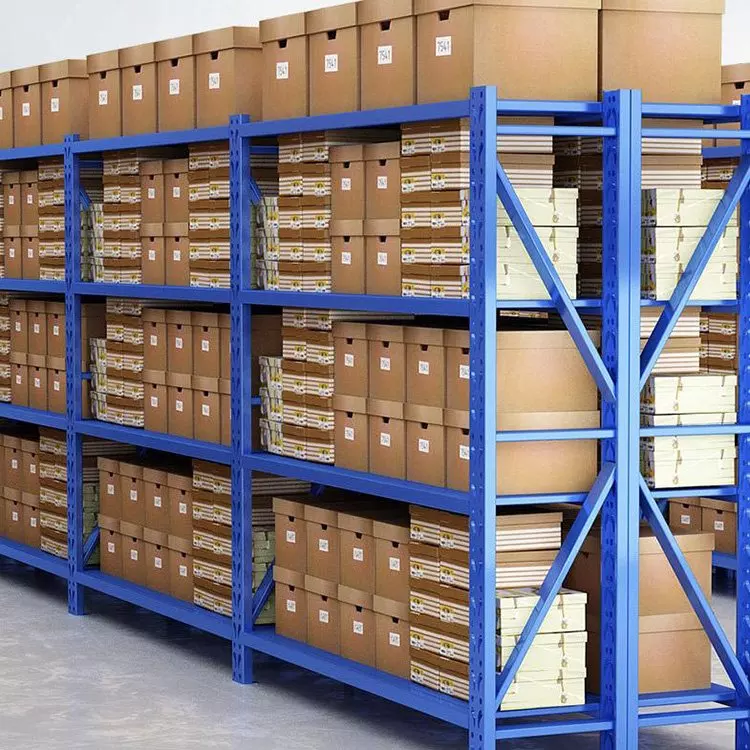
Warehouse medium duty shelving
The Product We Were Quoting
The customer was looking for a standard industrial steel shelving unit with the following dimensions:
- Size: L2000 × W600 × H2000 mm
- Levels: 4 levels
- Load capacity: 300 kg per level
- Application: Commercial and warehouse storage
- Structure: Boltless / assembled steel shelving
Our standard configuration used the following materials:
| Component | Our Specification |
|---|---|
| Upright | 80 × 40 × 1.0 mm |
| Beam | 60 × 40 × 1.0 mm |
| Shelf panel | 0.5 mm |
| Shelf reinforcement | 4 welded reinforcement ribs underneath |
| Rated capacity | 300 kg per level |
For us, these specifications were not simply numbers written on a quotation.
They represented the actual construction of the product.
But the competitor’s sample revealed a very different structure.
These prices are general reference ranges only. The final warehouse rack price depends on your specific project requirements.
A complete pallet racking project usually includes:
- Rack structure
- Upright frames and beams
- Wire decking or pallet supports
- Safety accessories
- Anchoring systems
- Transportation
- Installation
- Engineering design
For international warehouse projects, additional costs such as ocean freight, import duties, and local installation labor should also be considered.
What Did the Cheaper Shelving Actually Use?
After the customer’s sample arrived at his freight forwarder’s warehouse, the product was inspected and compared with our specifications.
The difference became obvious.
The cheaper supplier’s shelving used approximately:
| Component | Cheaper Sample |
| Upright | 75 × 35 × 0.6 mm |
| Beam | 60 × 40 × 0.6 mm |
| Shelf panel | 0.28 mm |
| Shelf reinforcement | Significantly reduced |
| Overall product weight | Approximately one-third lighter |
The most important difference was not the external appearance.
From several meters away, the two shelving units could look relatively similar.
The difference became obvious only when the products were measured, disassembled, and inspected.
This is exactly why comparing steel shelving quotations only by dimensions and price can be misleading.
Two products can both be described as:
L2000 × W600 × H2000 mm, 4 levels, 300 kg per level
while having very different material specifications.
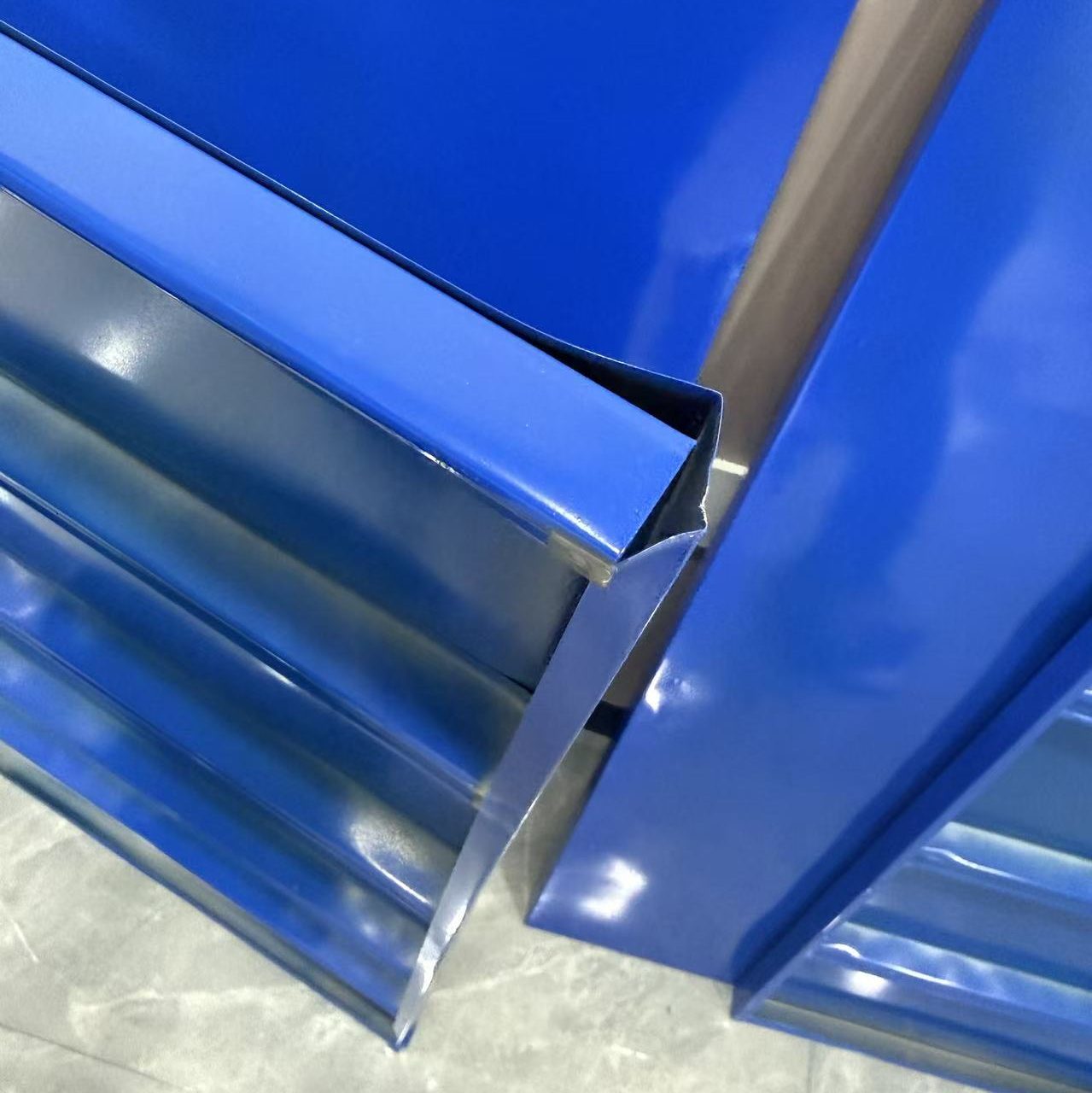
poor welding quality on steel shelving sample
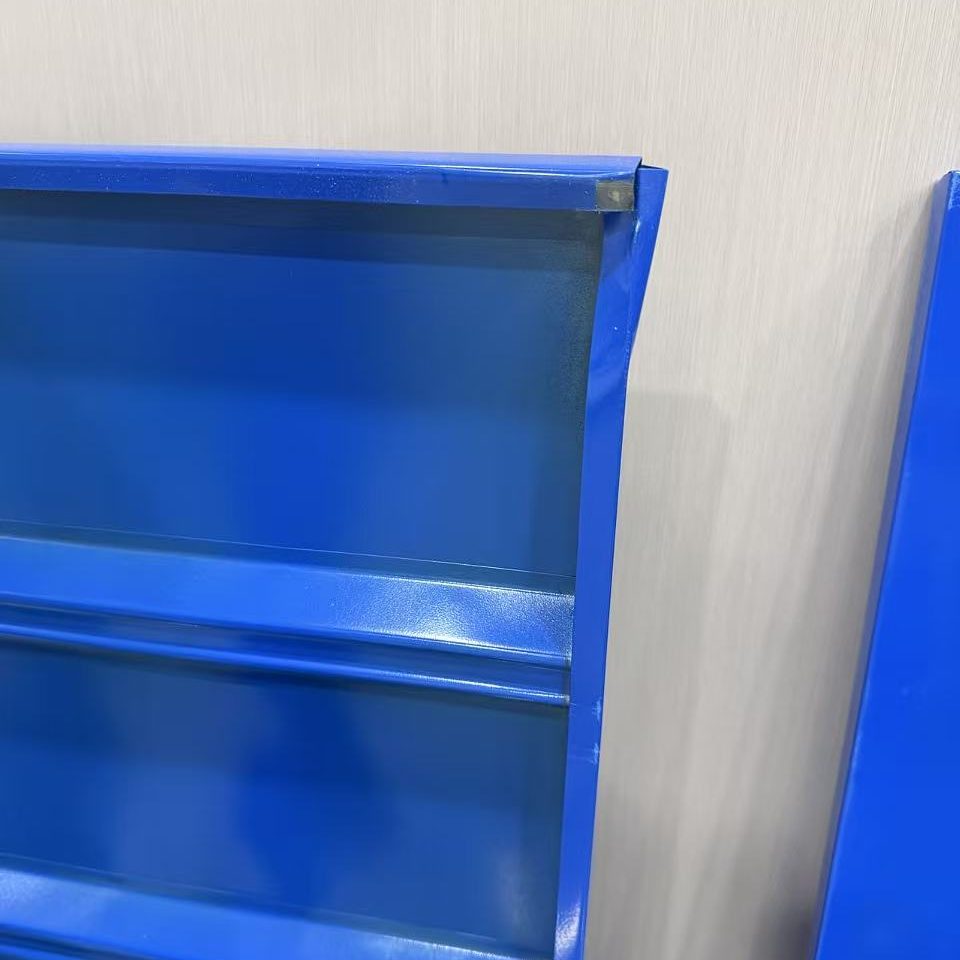
deformed steel shelving panel after unpacking
1. Steel Thickness Makes a Major Difference
One of the biggest differences was the thickness of the steel.
Our upright was:
80 × 40 × 1.0 mm
The competitor’s upright was:
75 × 35 × 0.6 mm
The competitor’s beam was also only 0.6 mm thick, compared with our 1.0 mm beam.
That difference may look small on paper.
But 1.0 mm and 0.6 mm are not the same material specification.
A shelving system is a structural product. Its performance depends on the combination of steel grade, section geometry, thickness, reinforcement, connections, manufacturing quality, and the way the load is distributed.
Steel thickness is therefore one of the specifications that buyers should verify rather than simply accepting a supplier’s stated load capacity.
In general, reducing material thickness is one of the most straightforward ways to reduce the amount of steel used in each unit.
And less steel means:
Lower product weight → lower material consumption → lower manufacturing cost.
That may explain part of a very low quotation.
2. The Shelf Panel Was Only 0.28 mm Thick
The difference became even more significant when we inspected the shelf panels.
Our standard shelf panel was 0.5 mm thick, with four welded reinforcement ribs underneath.
The competitor’s sample used a shelf panel of only 0.28 mm.
This is a substantial difference in material usage.
The shelf is the part that directly receives the stored goods. Its ability to maintain its shape depends not only on the nominal load rating but also on the panel thickness, reinforcement structure, span, support points, and manufacturing process.
For a distributor, this is particularly important.
A product may be advertised as having a certain load capacity, but the actual construction should be checked before placing a large resale order.
This is why we strongly recommend that importers and distributors inspect a physical sample before committing to a full container order, especially when comparing suppliers with dramatically different prices.
3. Reinforcement Is Not Just an Optional Detail
Another important difference was the reinforcement underneath the shelf.
Our shelf design uses four welded reinforcement ribs underneath the shelf panel.
These ribs increase the structural support of the shelf and help the panel maintain its shape under load.
The competitor’s sample had a much lighter construction.
When the sample was unpacked and inspected, the difference was no longer theoretical.
The customer could physically see the difference in the structure.
For steel shelving, reinforcement should therefore be considered as part of the overall specification rather than as a cosmetic feature.
A quotation that simply states:
“300 kg per shelf”
does not tell the buyer everything they need to know.
You should also ask:
- What is the shelf thickness?
- What is the reinforcement structure?
- How many reinforcement ribs are used?
- Are the ribs welded or mechanically fixed?
- What is the beam thickness?
- What is the upright thickness?
- How is the load capacity tested?
- Is the stated capacity per shelf or per unit?
- What safety factor is used?
These questions can reveal major differences between apparently similar products.
4. The Weight Difference Revealed the Real Cost Difference
One of the clearest signs was the overall product weight.
The competitor’s shelving unit was approximately one-third lighter than ours.
This is an important observation when comparing steel shelving suppliers.
If two products have almost identical external dimensions but one is dramatically lighter, buyers should investigate why.
There may be legitimate design differences.
But there may also be substantial differences in:
- Steel thickness
- Steel section size
- Reinforcement
- Number of structural components
- Welding
- Back support
- Shelf construction
- Connection design
For steel products, weight is not the only indicator of quality, but it is an important data point.
A simple question can often help:
“What is the actual net weight of one complete shelving unit?”
This is much more useful than comparing quotations based only on the product name.
5. The Problems Became Obvious After the Sample Was Unpacked
The biggest surprise came after the customer’s freight forwarder unpacked the sample.
Some of the welded areas on the shelf were already disconnected.
The edges of the shelf panels were visibly deformed.
The customer sent us photographs of the sample and was extremely dissatisfied with what he had received.
At that point, the original price comparison no longer mattered.
The customer was no longer comparing:
Supplier A: $X
versus
Supplier B: $Y
He was comparing two completely different products.
This is an important lesson for importers:
A cheap quotation is only cheap if the product actually meets the required specification.
If the product fails during assembly, transportation, installation, or use, the initial price advantage can quickly disappear.
Why Is Extremely Cheap Steel Shelving Risky for Distributors?
For a distributor, product quality has an additional dimension.
You are not simply buying a shelving unit for your own warehouse.
You are importing it into your country and selling it to your customers.
That means the product becomes part of your reputation.
Imagine a distributor imports 500 or 1,000 shelving units.
If the supplier saves money by reducing the steel thickness, reducing reinforcement, or cutting corners in welding, the distributor may initially make a higher margin.
But what happens when the end customers start complaining?
The distributor may have to deal with:
- Product returns
- Replacements
- Refunds
- Customer complaints
- Installation problems
- Damaged goods
- Reputation damage
- Additional transportation costs
- After-sales service
The supplier may be thousands of kilometers away.
The distributor, however, is the company facing the end customer directly.
That is why supplier selection is part of risk management, not simply price negotiation.
A Low Price Does Not Always Mean a Better Deal
When comparing steel shelving suppliers, it is tempting to ask:
“Can you match the competitor’s price?”
But a better question is:
“Are we comparing exactly the same specification?”
Before comparing quotations, make sure the following items are identical:
Steel Shelving Comparison Checklist
Dimensions
- Overall length
- Width
- Height
- Number of levels
Load Capacity
- Load per shelf
- Uniformly distributed load or point load
- Required safety factor
- Tested or calculated capacity
Steel Material
- Upright section size
- Upright thickness
- Beam section size
- Beam thickness
- Shelf thickness
- Reinforcement thickness
Construction
- Number of reinforcement ribs
- Welding method
- Connection structure
- Bracing structure
- Foot plates
- Shelf supports
Product Weight
- Net weight per unit
- Gross weight per unit
- Total container loading weight
Surface Treatment
- Powder coating thickness
- Pretreatment
- Coating quality
- Color specification
If these specifications are not the same, the quotations are not directly comparable.
How Can a Distributor Protect Himself When Buying from China?
If you are importing steel shelving from China for resale, we recommend a simple process.
Step 1: Ask for a Detailed Specification
Do not accept a quotation that only says:
“Heavy-duty shelving, 300 kg per level.”
Ask for the actual material specifications.
Step 2: Ask for Product Weight
Request the net weight of one complete unit.
This provides an additional reference when comparing similar products.
Step 3: Order a Sample
A sample is much cheaper than discovering quality problems after importing a full container.
Step 4: Inspect the Sample
Check:
- Steel thickness
- Section dimensions
- Shelf reinforcement
- Welding quality
- Surface finish
- Connections
- Overall dimensions
- Product weight
Step 5: Compare the Physical Product With the Quotation
This is extremely important.
Do not assume that the sample is automatically identical to the mass-production product.
Your purchase order should clearly state the agreed specifications.
Step 6: Confirm Quality Before Mass Production
For larger orders, consider factory inspection or third-party inspection before shipment.
This is especially valuable for distributors who will sell the products under their own business name.
What Happened With Our Customer?
After the competitor’s sample was inspected, the customer came back to us with the photographs.
He was no longer asking us to reduce our price.
Instead, he wanted to understand the differences between the two products.
We supplied another sample according to our original specification:
L2000 × W600 × H2000 mm
4 levels
300 kg per level
80 × 40 × 1.0 mm uprights
60 × 40 × 1.0 mm beams
0.5 mm shelf panels
Four welded reinforcement ribs underneath each shelf
The customer inspected the sample and confirmed that the construction met his requirements.
After the sample inspection was completed, he placed a 40HQ container order with Omni-Racking.
The final decision was no longer based on who offered the lowest initial quotation.
It was based on whether the supplier could provide a product that the distributor could confidently sell to his own customers.
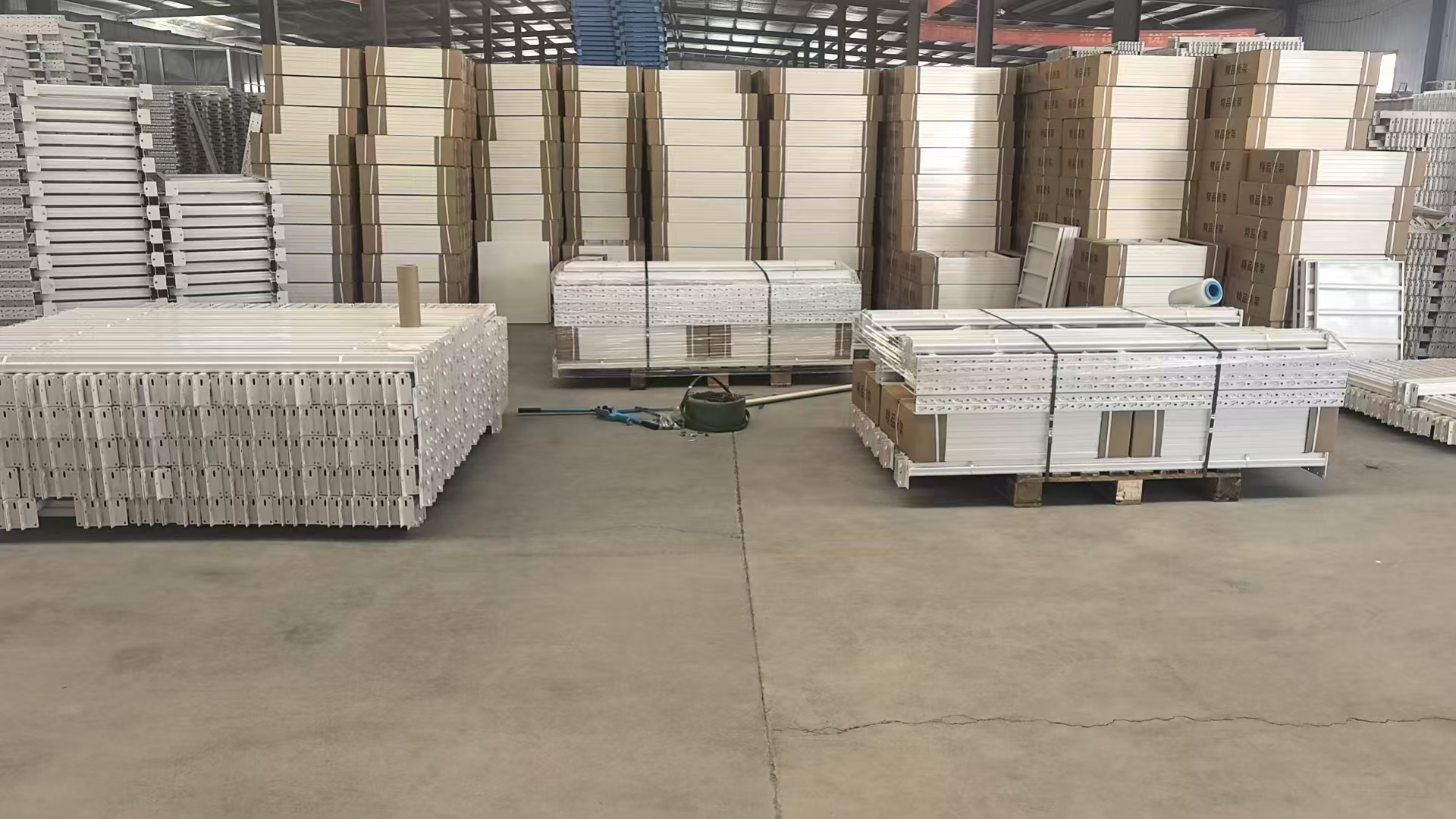
Our product packaging
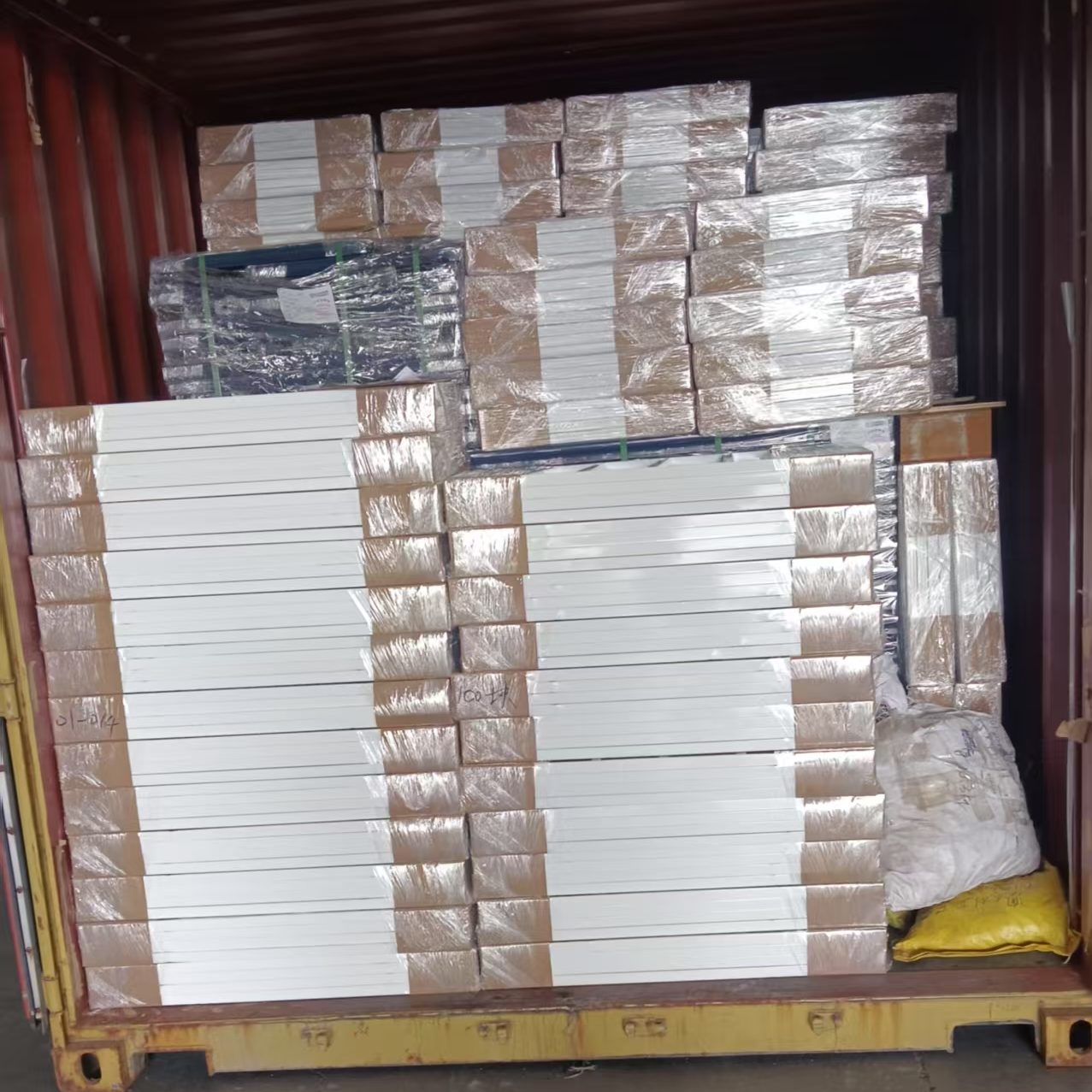
40HQ container loaded with steel shelving
Don't Compare Steel Shelving by Price Alone
This experience reinforced an important principle for us:
When a steel shelving quotation looks unusually cheap, don’t immediately assume that you have found a better supplier.
First ask:
What specification makes this price possible?
If the steel thickness, section size, reinforcement, welding, product weight, and manufacturing quality are all comparable, then a lower price may indeed represent better purchasing efficiency.
But if the supplier achieves a much lower price by using substantially less steel and a lighter construction, then you are not comparing the same product.
For distributors importing from China, a physical sample inspection can reveal more than dozens of emails about price.
Measure the steel.
Weigh the product.
Inspect the welding.
Check the reinforcement.
Compare the actual construction with the quotation.
And most importantly:
Don’t sacrifice long-term customer trust for a short-term price advantage.
At Omni-Racking, we believe that a successful supplier relationship is not built around being the cheapest quotation.
It is built around clear specifications, honest communication, consistent manufacturing quality, and products that our customers can confidently sell in their own markets.
If you are sourcing steel shelving, warehouse shelving, pallet racking, or other storage systems from China, we are happy to provide detailed specifications, samples, and customized solutions for your market.
Contact Omni-Racking to discuss your shelving requirements and request a detailed quotation.